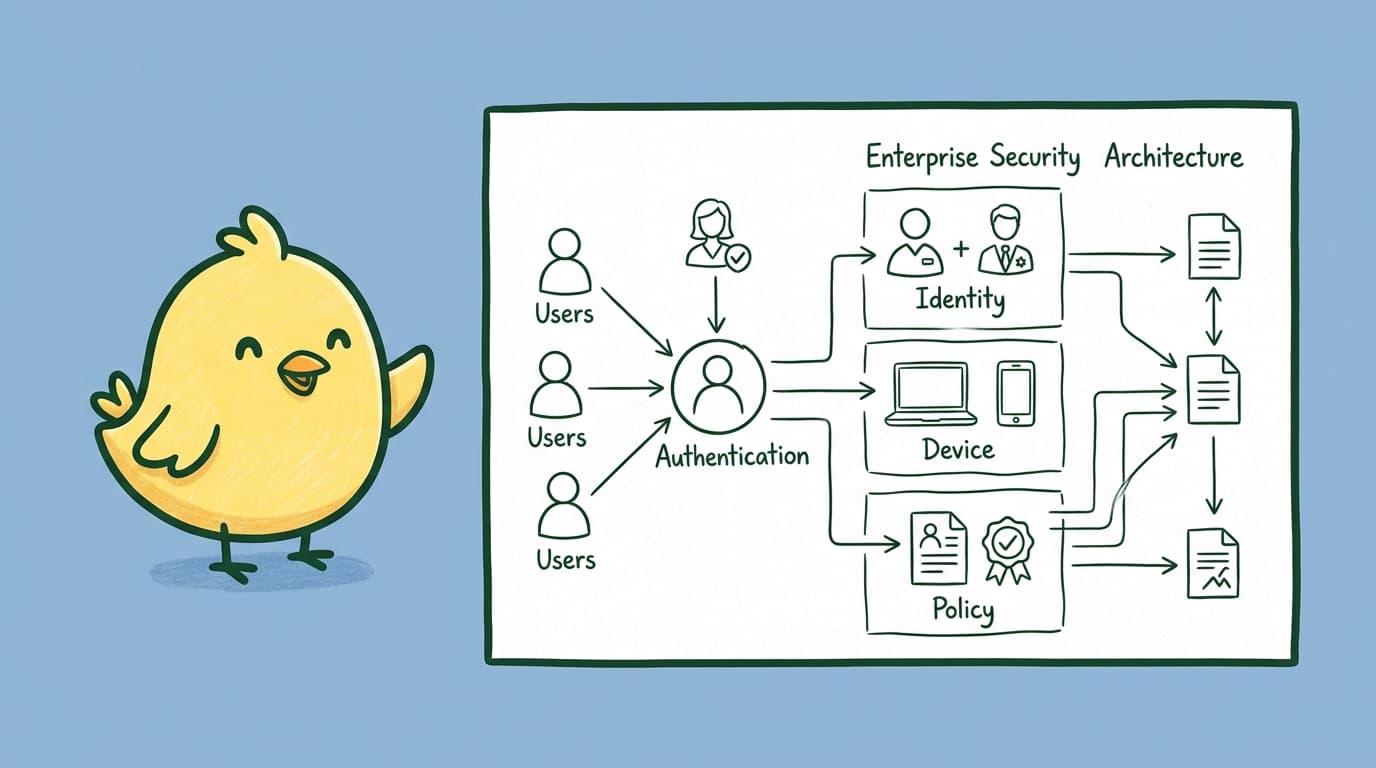
How to Ace the SC-100: Azure Cybersecurity Architect
Understanding the SC-100 Exam Domains
The Azure Cybersecurity Architect exam is divided into several key domains, each testing a specific set of skills. To succeed, you must have a balanced understanding of all these areas.
Commonly tested concepts include fundamental architecture, security best practices, and hands-on implementation details that are crucial for real-world scenarios.
Top Study Strategies for SC-100
1. Use Active Recall: Don't just read the material. Use ReadRoost's AI-generated flashcards to test yourself constantly.
2. Spaced Repetition: Our platform uses advanced SRS algorithms to ensure you review concepts just as you're about to forget them.
3. Hands-on Practice: For SC-100, theoretical knowledge isn't enough. Make sure to spend time in the lab environment or use our interactive quiz mode.
Why Use ReadRoost for SC-100?
ReadRoost offers specialized study packs for SC-100. Every question goes through our validation pipeline: Kimi K2 generates the question and explanation, Claude Opus reviews each one against the official learning materials for SC-100, and any unsupported claim gets flagged before it ships. Each pack also carries our Improvement Guarantee - if you study with us and do not feel more confident on exam day, money back.
With our progress tracking and domain-level analytics, you'll know exactly where you stand and which areas need more focus before exam day.
Test Your Knowledge
10 questions pulled from the live ReadRoost SC-100 pack. Answer each one to see where you stand before the exam.
Try 10 Free Questions
Question 1 of 10Your enterprise is designing a cybersecurity strategy to protect a complex hybrid cloud environment with multiple Microsoft 365 and Azure workloads. What approach best aligns with Microsoft's Cybersecurity Reference Architecture (MCRA) for comprehensive protection?
Knowledge Check (10 questions)
Question 1 · Design solutions that align with security best practices and priorities
Your enterprise is designing a cybersecurity strategy to protect a complex hybrid cloud environment with multiple Microsoft 365 and Azure workloads. What approach best aligns with Microsoft's Cybersecurity Reference Architecture (MCRA) for comprehensive protection?
- Option 1
- Option 2
- Option 3
- Option 4
Correct answer: Option 1
The Microsoft Cybersecurity Reference Architecture emphasizes a holistic Zero Trust approach that provides consistent security controls across all domains. This strategy ensures continuous verification, least privilege access, and integrated risk management across the entire technology ecosystem.
Question 2 · Design security operations, identity, and compliance capabilities
A global healthcare organization wants to implement a comprehensive identity management strategy that supports secure access for employees, partners, and patients across multiple regions. Which architecture approach should the security architect recommend?
- Option 4
- Option 2
- Option 3
- Option 1
Correct answer: Option 1
A multi-tenant Microsoft Entra ID architecture with B2B and B2C capabilities provides flexible, scalable identity management across different user types and regions. This approach allows granular access control, supports external collaboration, and enables centralized security policy enforcement.
Question 3 · Design security solutions for infrastructure
A large financial services organization wants to improve its cloud security posture across multiple cloud providers. Which strategy should the security architect recommend for comprehensive multi-cloud protection?
- Option 2
- Option 3
- Option 1
- Option 4
Correct answer: Option 1
Microsoft Defender for Cloud with multi-cloud connectors provides unified visibility, compliance, and threat protection across different cloud environments. This approach enables centralized security management, consistent policy enforcement, and comprehensive risk assessment across multiple cloud platforms.
Question 4 · Design security solutions for applications and data
A large enterprise wants to implement a comprehensive data protection strategy for sensitive customer information across Microsoft 365. Which approach would best address their requirements for preventing data leakage and maintaining compliance?
- Option 2
- Option 3
- Option 4
- Option 1
Correct answer: Option 1
A multi-layered DLP strategy with Microsoft Purview provides comprehensive protection by automatically identifying, classifying, and protecting sensitive data across multiple platforms. This approach enables adaptive policies, real-time monitoring, and integrated encryption to prevent unauthorized data sharing.
Question 5 · Design solutions that align with security best practices and priorities
A financial services organization wants to enhance its ransomware resilience strategy. Which comprehensive approach provides the most robust protection and recovery capabilities?
- Option 4
- Option 1
- Option 2
- Option 3
Correct answer: Option 1
A multi-layered ransomware resilience strategy requires technical controls like immutable storage, well-defined recovery procedures, and clear recovery time/point objectives. This approach minimizes potential data loss and ensures rapid, predictable recovery.
Question 6 · Design solutions that align with security best practices and priorities
Your organization needs to design a security governance framework that ensures continuous compliance and risk management. What approach best meets enterprise security requirements?
- Option 1
- Option 2
- Option 3
- Option 4
Correct answer: Option 1
Automated compliance monitoring provides real-time visibility, reduces human error, and enables proactive risk management. Integration with centralized dashboards allows leadership to make data-driven security decisions consistently.
Question 7 · Design solutions that align with security best practices and priorities
When designing a DevSecOps strategy for a cloud-native application development environment, what approach most effectively integrates security throughout the software development lifecycle?
- Option 4
- Option 2
- Option 1
- Option 3
Correct answer: Option 1
Shift-left security practices integrate security checks early in the development process, reducing vulnerabilities and enabling faster, more secure software delivery. Automated testing in CI/CD pipelines ensures consistent security validation.
Question 8 · Design solutions that align with security best practices and priorities
An enterprise needs to design a business continuity and disaster recovery strategy for mission-critical cloud workloads. What approach provides the most robust resilience?
- Option 2
- Option 3
- Option 1
- Option 4
Correct answer: Option 1
Multi-region deployments with zone-redundant configurations provide high availability and minimize potential downtime. Automated failover procedures ensure rapid recovery and minimize business impact during potential disruptions.
Question 9 · Design solutions that align with security best practices and priorities
When designing a defense-in-depth strategy for a hybrid cloud environment, what approach provides the most comprehensive protection against advanced persistent threats?
- Option 4
- Option 1
- Option 3
- Option 2
Correct answer: Option 1
Defense-in-depth requires multiple, integrated security layers that provide comprehensive protection across different attack vectors. This approach ensures that if one control fails, additional mechanisms can detect and mitigate potential threats.
Question 10 · Design solutions that align with security best practices and priorities
Your organization wants to improve its security posture and demonstrate continuous improvement. What strategy most effectively achieves this goal?
- Option 3
- Option 1
- Option 4
- Option 2
Correct answer: Option 1
Microsoft Secure Score provides a quantitative measurement of an organization's security posture, offering actionable recommendations and enabling continuous improvement tracking. This data-driven approach helps prioritize security investments.
Frequently Asked Questions
How long does it take to prepare for SC-100?
Preparation time varies, but most candidates spend between 4 to 8 weeks of dedicated study, depending on their prior experience.
What is the passing score for SC-100?
While passing scores can change, most certification exams require a score of around 700 out of 1000.
Are the ReadRoost SC-100 practice questions reliable?
Every SC-100 (Microsoft Cybersecurity Architect Expert) question in the ReadRoost pack goes through a two-stage validation pipeline. Kimi K2 generates the question and explanation, then Claude Opus reviews it against the official Microsoft learning materials — any claim the reviewer cannot verify gets flagged and rewritten before publish. The full pack ships 1102 questions, all spaced-repetition-tracked so you focus on weak areas first.
Master Your Exams with ReadRoost
Practice questions, flashcards, and timed exams for 57 certifications.
Related Articles
CCA-F vs AWS AIF-C01: Which AI Certification Should You Get First?
The AI certification landscape is barely a year old and already crowded. If you only have time for one entry-level credential in 2026, the two that are actually worth comparing are Anthropic's Claude Certified Architect Foundations (CCA-F), launched March 2026, and AWS's Certified AI Practitioner (AIF-C01), launched August 2024 and now the fastest-growing AWS certification in the catalogue. They look superficially similar (both are foundational, both cover generative AI, both sit at roughly USD 100) but they validate different skills and signal differently to different employers. This post is the honest side-by-side: who each one is for, why doing both still makes sense, and an unflinching read on which one the job market actually rewards today.
How to Pass the CCA-F Exam: Complete Study Guide (2026)
The Claude Certified Architect Foundations exam is the first credential built around real production work with Claude: agentic loops, the Claude Agent SDK, Claude Code, prompt engineering, the Model Context Protocol, and context management. The exam rewards people who have actually built something, not people who have memorised feature lists. This guide is the 2 to 4 week plan I would give a developer with around six months of Claude experience: how to spend each week, which free Anthropic resources to use, what to drill on the last weekend, and how to manage time on exam day. For a deeper breakdown of the question style and difficulty, see the companion post at /blog/cca-foundations-practice-questions, which has 12 worked-through sample questions from the same blueprint.
I Studied SY0-701 for Three Months - Here Is What I Would Do Differently From Day One
Three months into studying for SY0-701, I realised I had spent the first six weeks doing almost exactly the wrong thing. The material was not too hard. The exam was not unfair. I had simply absorbed twelve hours of Professor Messer videos before touching a practice question, memorised every acronym in a vacuum, and assumed performance-based questions would be a small part of the exam. None of that was wrong - all of it was in the wrong order. After helping hundreds of people prep through ReadRoost, the same five mistakes show up in nearly every pass-second-time story I hear. Here is the version of day one I wish I had given myself.