How to Ace the NETWORK-PLUS: CompTIA Network+
Understanding the NETWORK-PLUS Exam Domains
The CompTIA Network+ exam is divided into several key domains, each testing a specific set of skills. To succeed, you must have a balanced understanding of all these areas.
Commonly tested concepts include fundamental architecture, security best practices, and hands-on implementation details that are crucial for real-world scenarios.
Top Study Strategies for NETWORK-PLUS
1. Use Active Recall: Don't just read the material. Use ReadRoost's AI-generated flashcards to test yourself constantly.
2. Spaced Repetition: Our platform uses advanced SRS algorithms to ensure you review concepts just as you're about to forget them.
3. Hands-on Practice: For NETWORK-PLUS, theoretical knowledge isn't enough. Make sure to spend time in the lab environment or use our interactive quiz mode.
Why Use ReadRoost for NETWORK-PLUS?
ReadRoost offers specialized study packs for NETWORK-PLUS. Every question goes through our validation pipeline: Kimi K2 generates the question and explanation, Claude Opus reviews each one against the official learning materials for NETWORK-PLUS, and any unsupported claim gets flagged before it ships. Each pack also carries our Improvement Guarantee - if you study with us and do not feel more confident on exam day, money back.
With our progress tracking and domain-level analytics, you'll know exactly where you stand and which areas need more focus before exam day.

Test Your Knowledge
10 questions pulled from the live ReadRoost N10-009 pack. Answer each one to see where you stand before the exam.
Try 10 Free Questions
Question 1 of 10A network administrator needs to identify at which OSI model layer a switch operates to understand how it forwards frames. Which layer should the administrator reference?
Knowledge Check (10 questions)
Question 1 · Networking Concepts
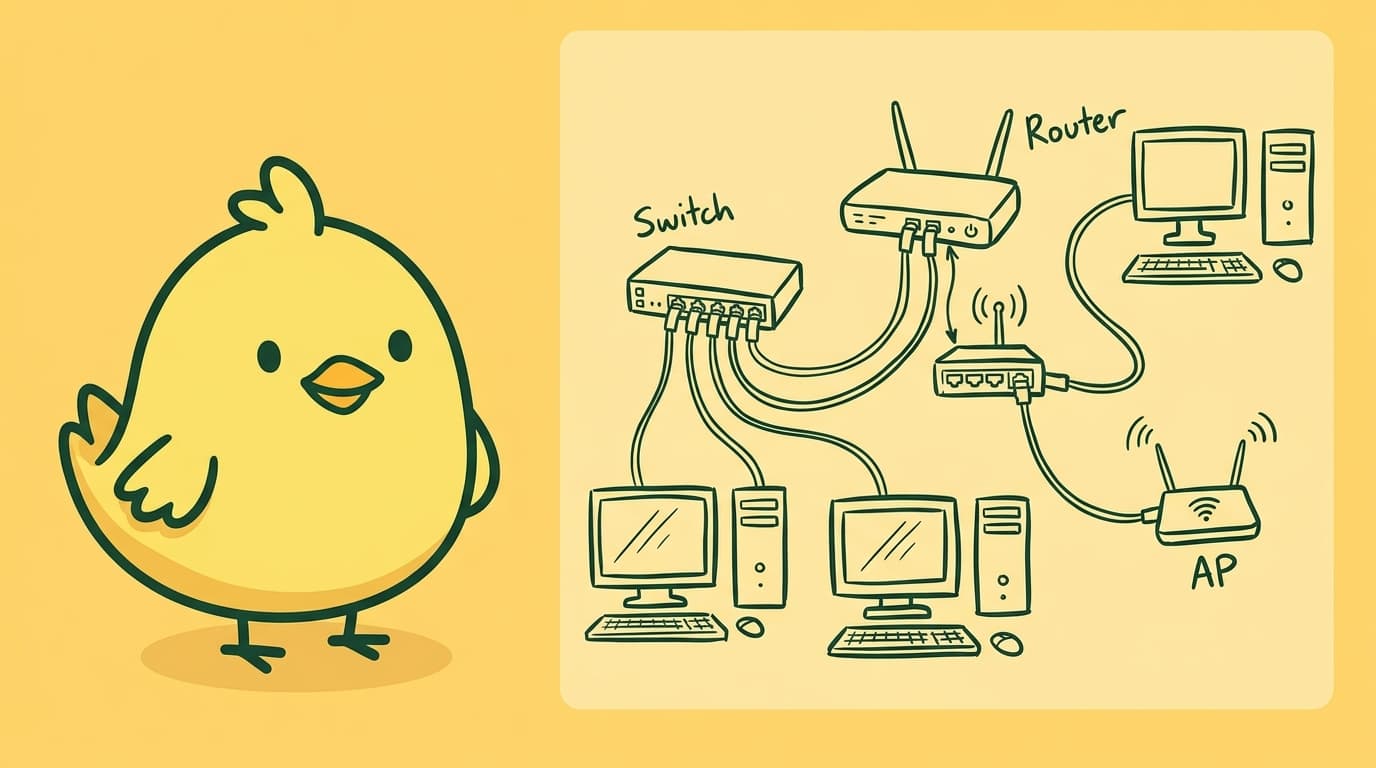
A network administrator needs to identify at which OSI model layer a switch operates to understand how it forwards frames. Which layer should the administrator reference?
- Layer 4 (Transport)
- Layer 3 (Network)
- Layer 1 (Physical)
- Layer 2 (Data Link)
Correct answer: Layer 2 (Data Link)
Switches operate at Layer 2 of the OSI model, using MAC addresses to forward frames between ports on the same network segment. Layer 3 devices (routers) use IP addresses and operate at a higher layer, making them unsuitable for this frame-forwarding operation.
Question 2 · Network Implementation
A network administrator needs to configure routing between two corporate offices connected via the Internet. The administrator wants to use a protocol that supports classless routing and requires the fewest CPU resources on aging router hardware. Which routing protocol should be implemented?
- EIGRP (Enhanced Interior Gateway Routing Protocol)
- OSPF (Open Shortest Path First)
- RIPv2 (Routing Information Protocol version 2)
- BGP (Border Gateway Protocol)
Correct answer: RIPv2 (Routing Information Protocol version 2)
RIPv2 supports classless routing (CIDR) and has minimal CPU overhead, making it ideal for legacy hardware despite its 15-hop limit. OSPF and EIGRP require significantly more processing power and memory, while BGP is designed for inter-AS routing and is overkill for this scenario.
Question 3 · Network Operations
A network administrator needs to monitor real-time network performance and detect anomalies in traffic patterns. Which of the following tools would be most appropriate for this task?
- Ping and traceroute utilities
- SNMP with NetFlow/sFlow collectors
- MAC address filtering rules
- Static routing tables
Correct answer: SNMP with NetFlow/sFlow collectors
SNMP (Simple Network Management Protocol) combined with NetFlow or sFlow provides real-time traffic analysis and performance metrics collection, enabling anomaly detection. Ping and traceroute are diagnostic tools, not monitoring solutions; static routing and MAC filtering are configuration tools that don't provide performance visibility.
Question 4 · Networking Concepts
A network administrator is configuring a network and needs to ensure devices can communicate across different networks using logical addresses. Which TCP/IP model layer is responsible for this function?
- Application Layer
- Link Layer
- Internet Layer
- Transport Layer
Correct answer: Internet Layer
The Internet Layer of the TCP/IP model handles logical addressing and routing using IP addresses, enabling communication across different networks. The Transport Layer handles end-to-end communication but does not manage network-to-network routing.
Question 5 · Networking Concepts
A company has a Class B IP address of 172.16.0.0 and needs to create 8 subnets. What subnet mask should be used to accomplish this while maximizing host addresses per subnet?
- 255.255.255.0
- 255.255.224.0
- 255.255.248.0
- 255.255.240.0
Correct answer: 255.255.240.0
A /20 subnet mask (255.255.240.0) provides 16 subnets with 4,094 usable host addresses each. The /24 mask creates too many subnets (256), while /23 creates only 2 subnets. The /21 mask (255.255.248.0) creates 32 subnets, exceeding the requirement.
Question 6 · Networking Concepts
A network administrator needs to configure a service that automatically assigns IP addresses to devices connecting to the network. Which protocol and port number should be configured?
- DNS on port 53
- HTTP on port 80
- DHCP on port 67/68
- SMTP on port 25
Correct answer: DHCP on port 67/68
DHCP (Dynamic Host Configuration Protocol) operates on UDP ports 67 (server) and 68 (client) to dynamically assign IP addresses. DNS (port 53) resolves domain names to IP addresses but does not assign addresses, and HTTP/SMTP are application-layer protocols unrelated to IP address assignment.
Question 7 · Networking Concepts
A network administrator is troubleshooting DNS resolution issues. The administrator needs to identify which protocol and port number DNS queries typically use for standard lookups.
- TCP port 443
- UDP port 161
- TCP port 3389
- UDP port 53
Correct answer: UDP port 53
DNS queries use UDP port 53 for standard lookups, which is connectionless and faster for simple queries. TCP port 53 is used for zone transfers and larger responses. UDP port 161 is SNMP, and TCP 3389 is RDP.
Question 8 · Networking Concepts
A company is designing a network topology where all devices connect to a central hub or switch in a star configuration. Which topology best describes this setup?
- Mesh topology
- Bus topology
- Ring topology
- Star topology
Correct answer: Star topology
A star topology has all devices connected to a central point (hub/switch), providing easy management and isolation of failures. Mesh topologies have multiple interconnections, ring topologies form a loop, and bus topologies use a single shared cable.
Question 9 · Networking Concepts
A network administrator is implementing a hybrid cloud strategy where some resources are on-premises and others are in public cloud services. Which cloud model best describes this approach?
- Public cloud
- Private cloud
- Hybrid cloud
- Community cloud
Correct answer: Hybrid cloud
Hybrid cloud combines on-premises infrastructure with public cloud services, allowing flexibility and scalability. Private cloud is entirely on-premises, public cloud is entirely vendor-hosted, and community cloud serves a specific group of organizations.
Question 10 · Networking Concepts
A network administrator needs to calculate the number of usable host addresses in a /28 subnet. How many usable hosts can be assigned in this subnet?
- 16
- 62
- 14
- 30
Correct answer: 14
A /28 subnet mask (255.255.255.240) provides 16 total addresses, with 2 reserved (network and broadcast), leaving 14 usable host addresses. A /27 provides 30 usable hosts, and /26 provides 62 usable hosts.
Frequently Asked Questions
How long does it take to prepare for NETWORK-PLUS?
Preparation time varies, but most candidates spend between 4 to 8 weeks of dedicated study, depending on their prior experience.
What is the passing score for NETWORK-PLUS?
While passing scores can change, most certification exams require a score of around 700 out of 1000.
Are the ReadRoost N10-009 practice questions reliable?
Every N10-009 (CompTIA Network+) question in the ReadRoost pack goes through a two-stage validation pipeline. Kimi K2 generates the question and explanation, then Claude Opus reviews it against the official CompTIA learning materials — any claim the reviewer cannot verify gets flagged and rewritten before publish. The full pack ships 500 questions, all spaced-repetition-tracked so you focus on weak areas first.
Master Your Exams with ReadRoost
Practice questions, flashcards, and timed exams for 57 certifications.
Related Articles
CCA-F vs AWS AIF-C01: Which AI Certification Should You Get First?
The AI certification landscape is barely a year old and already crowded. If you only have time for one entry-level credential in 2026, the two that are actually worth comparing are Anthropic's Claude Certified Architect Foundations (CCA-F), launched March 2026, and AWS's Certified AI Practitioner (AIF-C01), launched August 2024 and now the fastest-growing AWS certification in the catalogue. They look superficially similar (both are foundational, both cover generative AI, both sit at roughly USD 100) but they validate different skills and signal differently to different employers. This post is the honest side-by-side: who each one is for, why doing both still makes sense, and an unflinching read on which one the job market actually rewards today.
How to Pass the CCA-F Exam: Complete Study Guide (2026)
The Claude Certified Architect Foundations exam is the first credential built around real production work with Claude: agentic loops, the Claude Agent SDK, Claude Code, prompt engineering, the Model Context Protocol, and context management. The exam rewards people who have actually built something, not people who have memorised feature lists. This guide is the 2 to 4 week plan I would give a developer with around six months of Claude experience: how to spend each week, which free Anthropic resources to use, what to drill on the last weekend, and how to manage time on exam day. For a deeper breakdown of the question style and difficulty, see the companion post at /blog/cca-foundations-practice-questions, which has 12 worked-through sample questions from the same blueprint.
I Studied SY0-701 for Three Months - Here Is What I Would Do Differently From Day One
Three months into studying for SY0-701, I realised I had spent the first six weeks doing almost exactly the wrong thing. The material was not too hard. The exam was not unfair. I had simply absorbed twelve hours of Professor Messer videos before touching a practice question, memorised every acronym in a vacuum, and assumed performance-based questions would be a small part of the exam. None of that was wrong - all of it was in the wrong order. After helping hundreds of people prep through ReadRoost, the same five mistakes show up in nearly every pass-second-time story I hear. Here is the version of day one I wish I had given myself.