
From Help Desk to Security Engineer: The Certification Path That Actually Works
You have been in help desk for two years. You are tired of resetting passwords and explaining why "the Wi-Fi is not broken, you are just on the wrong network." You want to move into cybersecurity—specifically, become a Security Engineer. But the path feels foggy. What certs do you need? In what order? How long will it take? Will you actually make more money? This is the roadmap that takes you from help desk to security engineer, step by step, with realistic timelines and salary expectations.
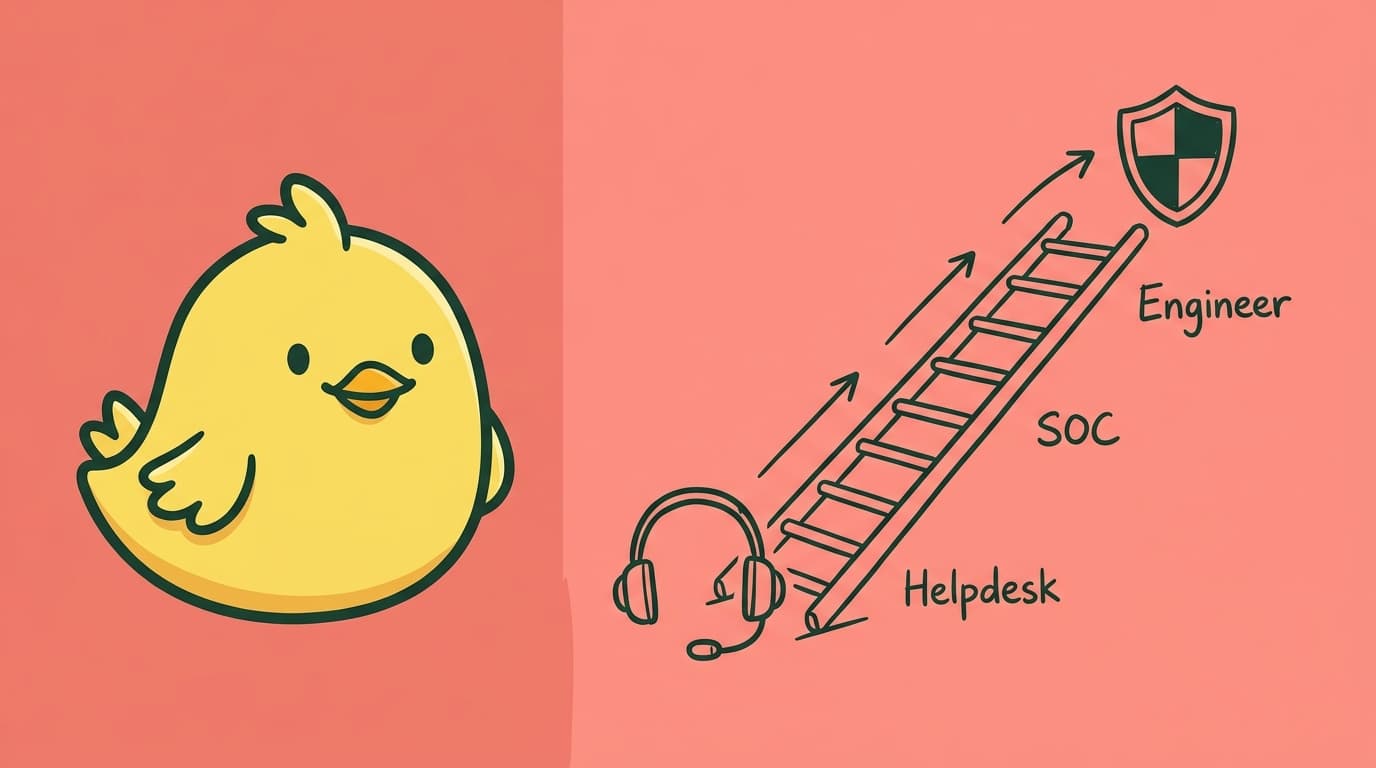
Why This Path Works
The help desk to security engineer transition is one of the most common paths in IT—and one of the most achievable. You already have foundational knowledge: you understand networks, you have troubleshot systems, you know how users break things. That context is invaluable in security.
What you lack is specialized security knowledge and proof that you have it. That is what certifications provide. They signal to employers that you are serious, that you have invested in learning, and that you meet a baseline competency standard.
This roadmap assumes you can study 10-15 hours per week while working full-time. If you can commit more, you will move faster. If less, adjust accordingly.
Phase 1: Foundation (Months 1-3)
Goal: Prove you understand networking and security fundamentals.
Certification: CompTIA Network+ Time: 6-8 weeks Cost: $358 exam + $150 materials
You might think, "I already know networking from help desk." But Network+ validates that knowledge with a vendor-neutral credential. It also fills gaps—subnetting, routing protocols, network segmentation—that help desk rarely touches deeply.
Certification: CompTIA Security+ Time: 8-10 weeks Cost: $404 exam + $200 materials
This is your foot in the door to cybersecurity. Security+ is required for most government security roles and preferred by employers everywhere. It covers the breadth of security concepts you need to speak intelligently in interviews.
Phase 2: Specialization (Months 4-9)
Goal: Develop technical depth in your chosen direction.
You have two main paths from here:
Path A: Cloud Security (Recommended for 2025) Certification: AWS Certified Security - Specialty OR Azure Security Engineer Time: 3-4 months Cost: $300 exam + $200 materials
Cloud security skills are in massive demand. Every company is moving to cloud, and they need people who understand how to secure it. AWS and Azure both have strong security certification paths.
Path B: Traditional Network Security Certification: Cisco CCNA Security or Palo Alto PCNSE Time: 4-6 months Cost: $300-400 exam + $250 materials
If you prefer on-premise networks and firewalls, this path leads to roles in enterprise security teams. It is less "hot" than cloud but still well-paid and stable.
Pick one path and commit. Do not try to do both simultaneously—you will spread yourself too thin.
Phase 3: Advanced Credential (Months 10-18)
Goal: Qualify for senior roles and salary jumps.
Certification: CISSP Time: 6-8 months of serious study Cost: $749 exam + $500 materials Requirements: 5 years of experience (or 4 with degree)
CISSP is the gold standard for security professionals. It opens doors to senior security engineer, security architect, and management roles. It is challenging—expect to study 15-20 hours per week—but the ROI is substantial.
Alternative: OSCP (Offensive Security) If you want to pursue penetration testing rather than defensive security, OSCP is the credential that matters. It is practical, hands-on, and highly respected. Be warned: it is significantly harder than CISSP and requires strong Linux and scripting skills.
The Salary Reality
Here is what the progression looks like financially:
Help Desk (Current): $40,000-$55,000 Security Analyst (Year 1-2): $65,000-$85,000 Security Engineer (Year 3-5): $95,000-$130,000 Senior Security Engineer (Year 5+): $130,000-$180,000
Geography matters significantly. These numbers are US-based. In high-cost areas (SF, NYC, Seattle), add 30-50%. In lower-cost regions, subtract 10-20%.
The certification investment pays for itself quickly. Even a $2,000 investment in exams and materials yields a $20,000+ salary increase typically within 12-18 months.
Making the Transition: Job Search Strategy
Certifications get you interviews. These strategies get you hired:
1. Leverage Your Help Desk Experience Do not hide it. Frame it as "I understand how users think and how systems break from the ground up." Security teams value people who know the operational side.
2. Build a Home Lab Set up a virtual security lab at home. Firewalls, SIEM tools, vulnerable machines to practice on. Document what you build. Interviewers love candidates who have hands-on experience beyond just studying.
3. Start with Security-Focused Help Desk Roles Look for help desk positions at security-conscious companies (financial services, healthcare, government contractors). These roles expose you to security tools and processes while you study.
4. Network in Security Communities Join local BSides events, ISC2 chapters, or online communities. Many security jobs are filled through referrals before they ever hit job boards.
5. Use ReadRoost to Track Your Progress As you study for each certification, our platform surfaces your weak areas through mistake-driven review and tracks domain-specific progress so you know exactly where to focus before exam day. When you walk into interviews, you will speak confidently about security concepts because you have actually drilled the right ones - not just memorised at random.
The Timeline Summary
Month 1-3: Network+ and Security+ Month 4-9: Cloud Security (AWS/Azure) or Network Security cert Month 10-18: CISSP or OSCP Total Time: 12-18 months from help desk to security engineer role Total Investment: $2,000-$3,000 in exams and materials Expected Salary Increase: $40,000-$75,000
This is not a get-rich-quick scheme. It requires consistent effort, weekend study sessions, and sacrifice. But it is a proven path that thousands have walked before you.
The security industry needs people who understand both the technical and operational sides of IT. Your help desk background is not a limitation—it is a foundation. Build on it with certifications, hands-on practice, and persistence.
Ready to start your transition? Create your free ReadRoost account and begin with our Security+ study pack. Track your progress, build your knowledge, and take the first step toward your security engineer career. The path is clear. All you need to do is walk it.
Frequently Asked Questions
Can I really become a security engineer without a degree?
Yes. While some employers require degrees, many prioritize certifications and experience. The certifications in this roadmap (Network+, Security+, CISSP) carry significant weight and can substitute for formal education in many cases.
How long does it take to go from help desk to security engineer?
With consistent study (10-15 hours/week), most people complete this transition in 12-18 months. The timeline varies based on your starting knowledge, available study time, and how quickly you pass each certification exam.
Should I specialize in cloud security or traditional network security?
Cloud security offers more job opportunities and faster salary growth in 2025. However, traditional network security remains stable and well-paid. Choose based on your interests and local job market.
Do I need to complete all these certifications before applying for security jobs?
No. Start applying after Security+. Many people land security analyst roles while working on their cloud security or CISSP certifications. The job experience accelerates your learning.
How does ReadRoost help with certification study?
ReadRoost provides AI-validated practice questions with detailed explanations citing the official documentation. Mistake-driven review pulls your weak topics to the top of the queue. Track your progress across domains and walk into exam day confident - backed by the Improvement Guarantee.
AWS Microcredentials: the free, hands-on badge most people missed
Four AWS security services changed in a single week. Here is what SAA-C03 and SCS-C03 candidates need to know.
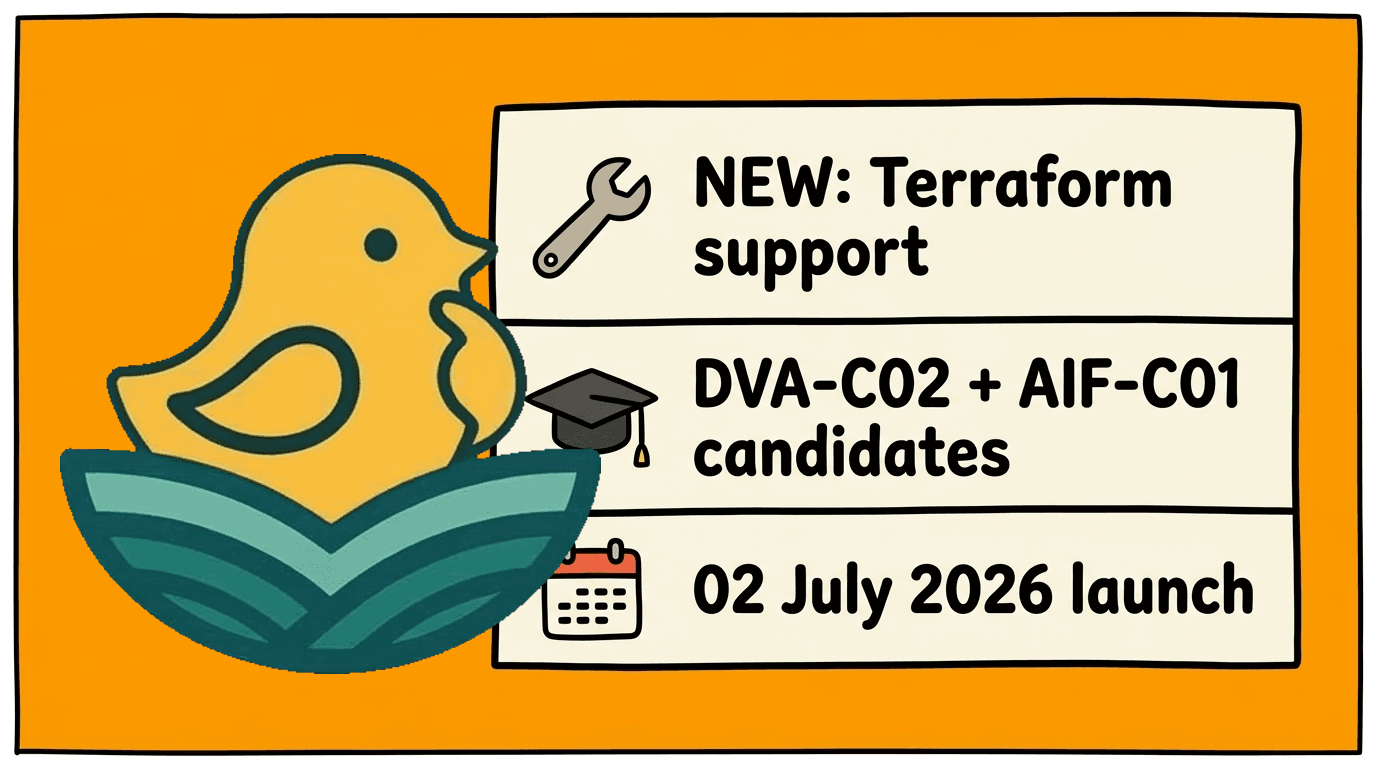
AWS just put Terraform inside SageMaker Unified Studio. Here is what that means for DVA-C02 and AIF-C01.
Reading is good. Practising is better.
Practice questions, flashcards and timed exams for 57 certifications. Start with a free starter pack — no card needed.