
ExamTopics Alternative: Why IT Pros Are Switching in 2025
If you've studied for IT certifications recently, you know ExamTopics. It's been the go-to for practice questions for years. But something changed in 2024—and in 2025, experienced candidates are actively seeking alternatives. Price hikes, questionable answer quality, and a deteriorating user experience are driving the exodus. Here's what's actually happening, and where IT professionals are going instead.
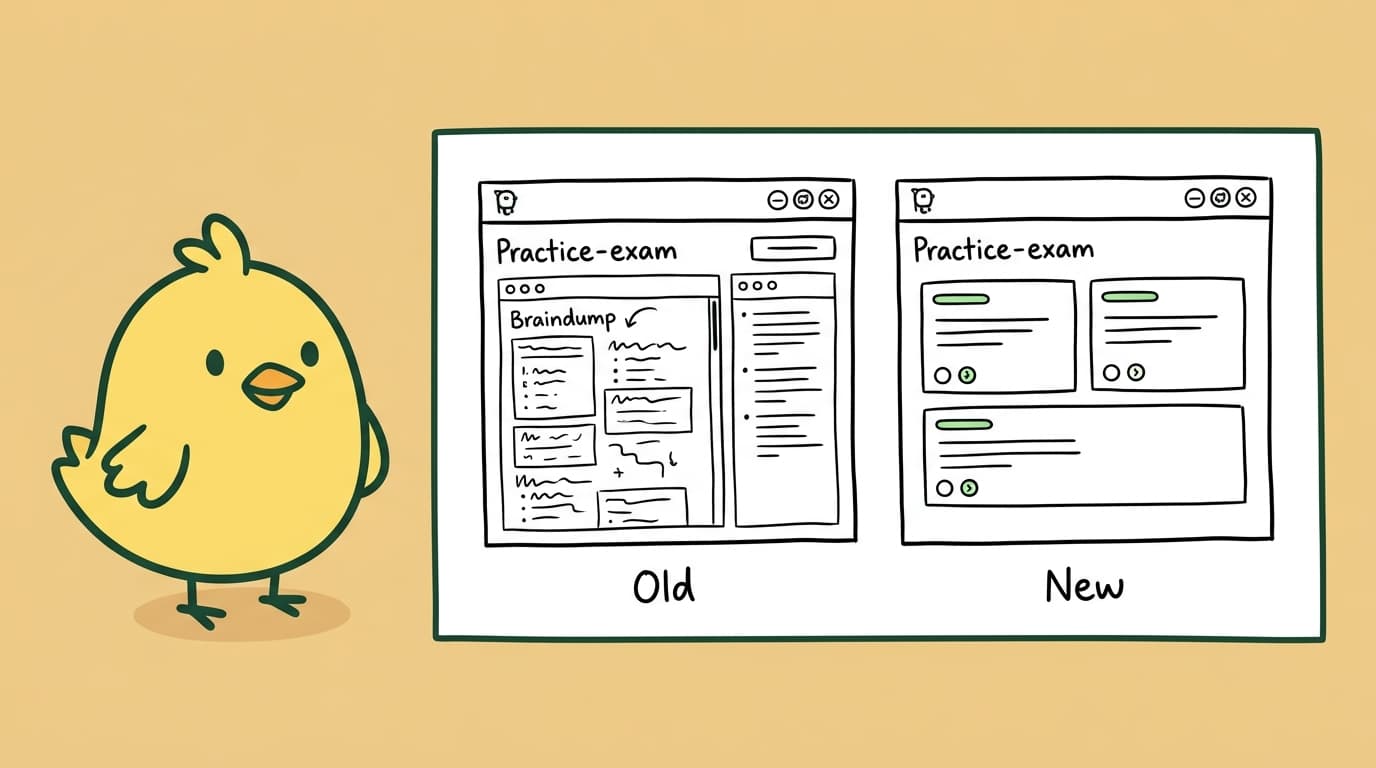
The Problem: Why ExamTopics Lost Its Edge
ExamTopics built its reputation on community-contributed exam questions. For years, it was a valuable resource—crowdsourced content that helped candidates understand what to expect. But the model started breaking down.
Price hikes hit first. What was once a reasonable subscription became increasingly expensive, with pricing tiers that feel punitive for casual users. The "free" tier became nearly unusable, buried under aggressive paywalls and limited access.
Answer quality declined as the platform scaled. Community voting was supposed to surface correct answers, but the system became gamed. Incorrect answers accumulated votes from users who didn't know better, creating a feedback loop of misinformation. Experienced professionals found themselves spending more time correcting answers than learning from them.
The user experience stagnated. While competitors invested in mobile apps, spaced repetition algorithms, and AI-powered explanations, ExamTopics remained essentially unchanged—an aging forum-style interface that feels increasingly dated.
What IT Pros Actually Need
I've talked to dozens of certification candidates over the past year. Their complaints are consistent. They don't just need questions—they need confidence that they're studying the right material.
Verified answers matter. When you're preparing for a $400 exam that could advance your career, "maybe this is right" isn't good enough. You need explanations written by people who've actually passed the exam, citing official documentation.
Fair pricing matters. Certification candidates are often career-changers or early-career professionals. A subscription shouldn't cost as much as the exam itself. Transparent pricing without surprise renewals or predatory upsells.
Modern study tools matter. Passive reading doesn't work. You need active recall, spaced repetition, and progress tracking that shows where you're weak. A question bank alone isn't enough anymore.
The Data: What Users Actually Experience
I analyzed user feedback from Reddit, Discord study groups, and direct conversations. The pattern is clear.
On ExamTopics, users report spending 30-40% of their study time debating answer correctness in comment threads. That's time not spent actually learning. Worse, many candidates report encountering the same incorrect answers on their actual exams—evidence that some ExamTopics content is outdated or wrong.
By contrast, users of newer platforms report higher confidence going into exams. The difference? Verified explanations. When you understand why an answer is correct—not just that it's correct—you're prepared for exam variations and real-world scenarios.
First-attempt pass rates tell the story. Anecdotal data from study groups suggests candidates using modern platforms with validated content pass at higher rates than those relying solely on crowdsourced question banks.
What to Look for in an ExamTopics Alternative
If you're shopping for a new platform, prioritize these features:
1. Validated Content with Citations: Every question and explanation should be traceable back to authoritative source material - Microsoft Learn for Azure exams, AWS Skill Builder and the AWS docs for AWS, the CompTIA objectives PDF for CompTIA. Whether the platform uses humans, AI, or a hybrid pipeline matters less than whether each answer can be verified against a citable source. Anonymous voting on a crowdsourced question bank is the failure mode to avoid.
2. Active Recall Features: Flashcards, quiz modes, and self-testing tools should be built-in. You shouldn't need to export questions to Anki or Quizlet to study effectively.
3. Progress Tracking: You need to know which domains you're strong in and which need work. Vague "progress bars" aren't enough—look for domain-level breakdowns.
4. Fair Pricing: A good platform shouldn't cost more than the exam itself. Free tiers should be genuinely useful, not just lead magnets.
5. Modern UX: Mobile-responsive design, dark mode, and clean interfaces aren't luxuries—they're basic expectations in 2025.
Why ReadRoost Is Built Different
Full disclosure: I built ReadRoost because I was frustrated with existing options. But this isn't a sales pitch—it's a design philosophy.
Every answer is validated against the official source. Our content pipeline uses Kimi K2 to generate questions and explanations, Claude Opus to review each one against the actual official learning materials for that exam (Microsoft Learn for Azure, AWS Skill Builder for AWS, the CompTIA objectives PDF for CompTIA), and any answer that cannot be traced to a citable source gets flagged before it ships. We use AI to scale content. We do not trust unvalidated AI output. When an exam version changes, we update the content - no stale questions from retired exam versions.
AI that is validated, not trusted. Roost AI uses Kimi K2 for generation and Claude Opus for validation against the official learning materials. Every question carries a citation back to the source we validated it against. When you challenge an answer, we can show you exactly where in the official documentation the answer comes from.
Active recall built into the question bank. Mistake-driven review surfaces what you got wrong faster than what you got right. Spaced repetition pulls weak topics back to the top of your queue without you having to track them yourself.
Transparent pricing. Free forever plan includes core features. Premium is priced fairly—less than a month of coffee, not a car payment.
The Bottom Line
You don't need to settle for outdated tools. The certification prep landscape has evolved, and platforms that haven't kept up are losing users for good reason.
If you're currently using ExamTopics and feeling frustrated—constant doubt about answer correctness, annoyance at the pricing, or just a dated experience—you're not alone. Thousands of IT professionals made the switch in 2024. In 2025, that trend is accelerating.
The exam is hard enough. Your study tools shouldn't make it harder.
Ready to try something better? Create your free ReadRoost account and access validated practice questions for your exam. No credit card required. See the difference an actual validation pipeline makes.
Frequently Asked Questions
Is ExamTopics still worth using in 2025?
While ExamTopics still has a large question database, many users report declining answer quality and aggressive pricing. For high-stakes exams, verified alternatives provide more confidence.
What makes ReadRoost different from other alternatives?
ReadRoost combines AI-validated practice questions with active-recall study tools and the Improvement Guarantee. Every answer is generated by Kimi K2, reviewed by Claude Opus against the official learning materials for that exam, and includes detailed explanations citing the authoritative source.
How do I know the practice questions are accurate?
Every question is generated by Kimi K2, then reviewed by Claude Opus against the official learning materials for the exam (Microsoft Learn for Azure, AWS Skill Builder for AWS, the CompTIA objectives PDF for CompTIA). Anything Opus cannot trace to a citable source is flagged before it ships. If you find an error, the in-platform feedback button gets it triaged and fixed.
Is there a free trial?
ReadRoost offers a generous free forever plan with core features. Premium plans unlock unlimited AI generation and advanced analytics.
Which exams does ReadRoost cover?
ReadRoost covers major IT certifications including CompTIA (Security+, Network+, A+), AWS, Azure, Google Cloud, and CISSP. New exams are added regularly.
AWS Microcredentials: the free, hands-on badge most people missed
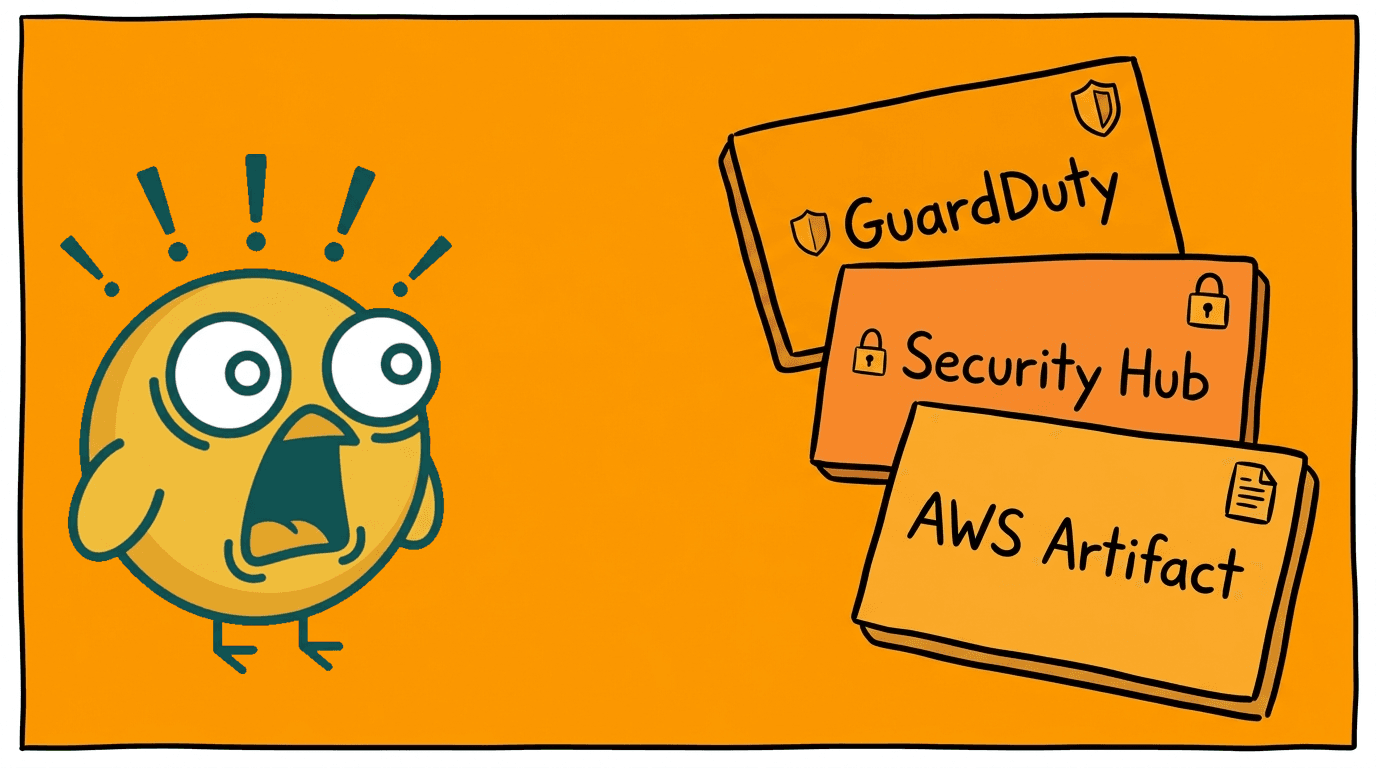
Four AWS security services changed in a single week. Here is what SAA-C03 and SCS-C03 candidates need to know.
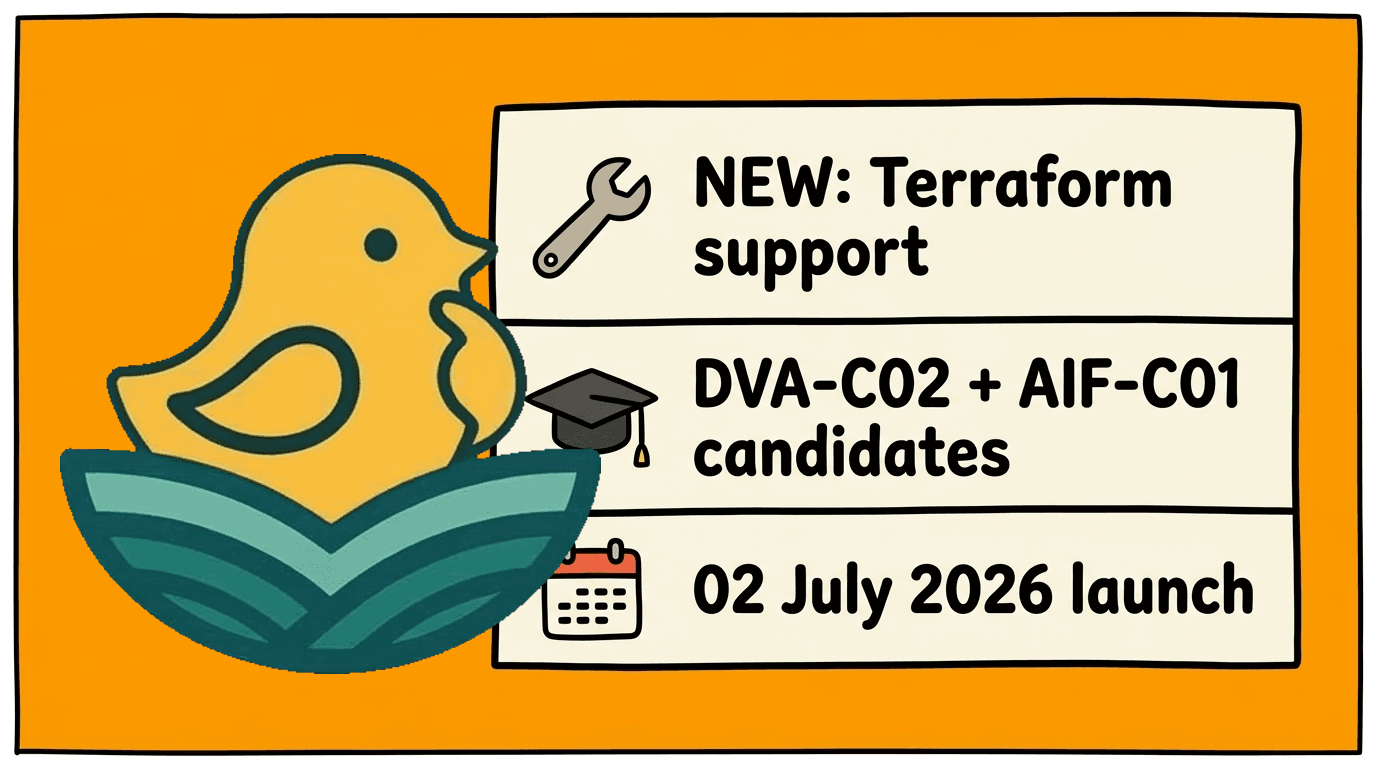
AWS just put Terraform inside SageMaker Unified Studio. Here is what that means for DVA-C02 and AIF-C01.
Reading is good. Practising is better.
Practice questions, flashcards and timed exams for 57 certifications. Start with a free starter pack — no card needed.