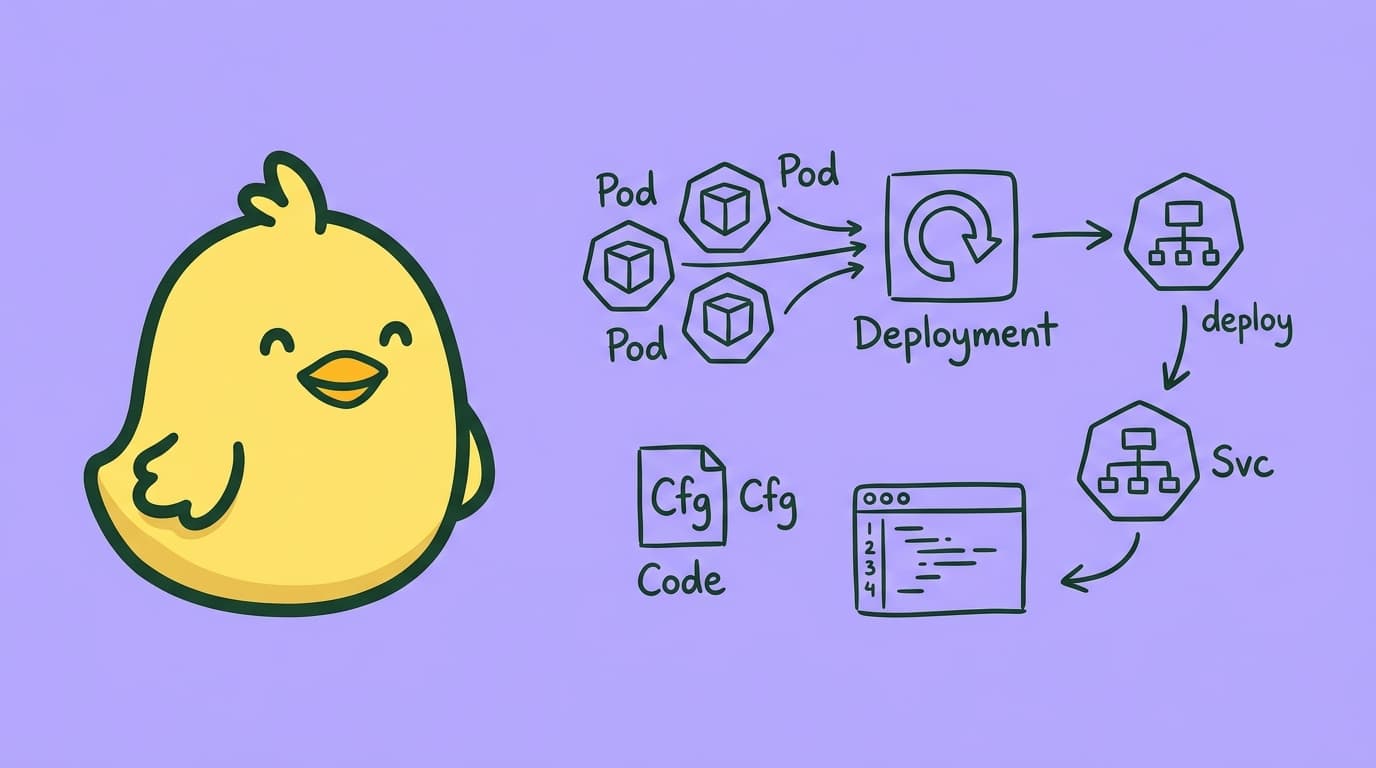
How to Ace the CKAD: Certified Kubernetes Application Developer
Understanding the CKAD Exam Domains
The Certified Kubernetes Application Developer exam is divided into several key domains, each testing a specific set of skills. To succeed, you must have a balanced understanding of all these areas.
Commonly tested concepts include fundamental architecture, security best practices, and hands-on implementation details that are crucial for real-world scenarios.
Top Study Strategies for CKAD
1. Use Active Recall: Don't just read the material. Use ReadRoost's AI-generated flashcards to test yourself constantly.
2. Spaced Repetition: Our platform uses advanced SRS algorithms to ensure you review concepts just as you're about to forget them.
3. Hands-on Practice: For CKAD, theoretical knowledge isn't enough. Make sure to spend time in the lab environment or use our interactive quiz mode.
Why Use ReadRoost for CKAD?
ReadRoost offers specialized study packs for CKAD. Every question goes through our validation pipeline: Kimi K2 generates the question and explanation, Claude Opus reviews each one against the official learning materials for CKAD, and any unsupported claim gets flagged before it ships. Each pack also carries our Improvement Guarantee - if you study with us and do not feel more confident on exam day, money back.
With our progress tracking and domain-level analytics, you'll know exactly where you stand and which areas need more focus before exam day.
Test Your Knowledge
10 questions pulled from the live ReadRoost CKAD pack. Answer each one to see where you stand before the exam.
Try 10 Free Questions
Question 1 of 10You need to create a container image for a Node.js application. Your Dockerfile has the following structure: FROM node:18 / WORKDIR /app / COPY package*.json ./ / RUN npm install / COPY . . / EXPOSE 3000 / CMD ["node", "server.js"]. When you build this image with 'docker build -t myapp:v1 .', which layer would be most frequently rebuilt during development?
Knowledge Check (10 questions)
Question 1 · Application Design and Build
You need to create a container image for a Node.js application. Your Dockerfile has the following structure: FROM node:18 / WORKDIR /app / COPY package*.json ./ / RUN npm install / COPY . . / EXPOSE 3000 / CMD ["node", "server.js"]. When you build this image with 'docker build -t myapp:v1 .', which layer would be most frequently rebuilt during development?
- The EXPOSE layer, because it changes every time you modify source code
- The COPY . . layer, because it copies updated source code
- The RUN npm install layer, because dependencies need to be reinstalled
- The FROM node:18 layer, because it's always rebuilt first
Correct answer: The COPY . . layer, because it copies updated source code
The COPY . . layer runs last and copies your source code, so it's invalidated most frequently during development. Docker's layer caching means previous layers (FROM, WORKDIR, COPY package*.json, RUN npm install) are reused if unchanged, but the final COPY is executed whenever source files change.
Question 2 · Application Deployment
You have a Deployment with image 'myapp:v1'. You realize a security vulnerability exists and need to update to 'myapp:v2' immediately. You run 'kubectl set image deployment/myapp myapp=myapp:v2'. What happens to the current Pods?
- All Pods are deleted immediately, and new ones with v2 are created
- A rolling update begins with new Pods running v2 gradually replacing v1 Pods
- The Deployment image is changed, but existing Pods continue running v1 until manually restarted
- The update waits for a scheduled maintenance window
Correct answer: A rolling update begins with new Pods running v2 gradually replacing v1 Pods
'kubectl set image' triggers a rolling update by default. New Pods with the v2 image are created and old v1 Pods are gradually terminated, respecting the Deployment's update strategy parameters (maxUnavailable, maxSurge).
Question 3 · Application Observability and Maintenance
An application logs to stdout, and you need to retrieve logs from the last 2 hours for debugging. Which kubectl command is most appropriate?
- kubectl logs <pod-name> --since=2h
- kubectl logs <pod-name> --tail=1000
- kubectl describe pod <pod-name> | grep -i log
- kubectl get pod <pod-name> -o yaml | grep 'log'
Correct answer: kubectl logs <pod-name> --since=2h
'kubectl logs --since=2h' retrieves log entries from the last 2 hours. The '--tail' flag limits the number of lines, not the time window. 'describe' and 'get' show metadata, not the actual logs.
Question 4 · Services and Networking
You have a web application pod that should only be accessible from other pods within the cluster, not from outside. Which Service type should you create?
- NodePort service to expose on a random port
- LoadBalancer service with external IP
- ClusterIP service (default) for internal-only access
- ExternalName service
Correct answer: ClusterIP service (default) for internal-only access
ClusterIP is the default Service type and provides only internal cluster access via a stable internal IP and DNS name. It's not accessible from outside the cluster.
Question 5 · Application Design and Build
You have a multi-container Pod with an application container and a logging sidecar. The sidecar reads logs from a shared volume at /var/log/app and sends them to a centralized logging service. Which volume type would be most appropriate for this use case?
- hostPath volume, to write directly to the node's filesystem
- emptyDir volume, to provide temporary shared storage for the pod's containers
- persistentVolumeClaim, to persist logs across pod restarts
- configMap volume, to mount configuration files
Correct answer: emptyDir volume, to provide temporary shared storage for the pod's containers
An emptyDir volume is created when a Pod is assigned to a node and persists for the Pod's lifetime, making it ideal for inter-container communication. Since both containers are in the same Pod, they can share data via emptyDir without needing node-level or persistent storage.

Question 6 · Application Design and Build
Your Kubernetes cluster runs a web application that must process files uploaded by users and store them permanently. Which workload resource and volume combination best addresses this requirement?
- DaemonSet with hostPath volumes
- Deployment with PersistentVolumeClaim volumes
- CronJob with emptyDir volumes
- Job with configMap volumes
Correct answer: Deployment with PersistentVolumeClaim volumes
A Deployment manages stateless or stateful replicas of your application, and PersistentVolumeClaim volumes provide durable storage that survives pod restarts and rescheduling. This is the standard pattern for applications requiring persistent data.
Question 7 · Application Design and Build
A DaemonSet is running monitoring agents on every node in your cluster. A new node is added to the cluster. What happens to the DaemonSet?
- The DaemonSet is not affected until you manually trigger a redeployment
- A new Pod is automatically created on the new node to match the DaemonSet
- The DaemonSet must be restarted to recognize the new node
- You must edit the DaemonSet to specify the new node name
Correct answer: A new Pod is automatically created on the new node to match the DaemonSet
DaemonSets automatically ensure that a Pod runs on every node in the cluster, including newly added nodes. The controller monitors the cluster state and creates/removes Pods as nodes are added/removed.
Question 8 · Application Design and Build
You're deploying a batch processing job that must run exactly once and complete successfully. The job processes 1000 CSV files. Which Kubernetes resource should you use?
- Deployment, because it manages long-running applications
- CronJob, because it schedules jobs periodically
- Job, because it runs to completion and stops
- StatefulSet, because the files have order dependencies
Correct answer: Job, because it runs to completion and stops
A Job creates Pods and ensures they run to completion. It's designed for one-off or batch workloads that need to execute once or a specified number of times and then stop. Unlike Deployments (which run indefinitely) or CronJobs (which run on a schedule), Jobs are ideal for batch processing.
Question 9 · Application Design and Build
You have a CronJob configured to run every day at 2 AM. The schedule expression is '0 2 * * *'. The job sometimes takes 45 minutes to complete, and the next scheduled run might start before the previous one finishes. How can you prevent overlapping job executions?
- Set the 'concurrencyPolicy' field to 'Forbid' in the CronJob spec
- Reduce the job execution time below 24 hours
- Set the 'backoffLimit' to 1 in the CronJob spec
- Configure 'restartPolicy: Never' in the Pod template
Correct answer: Set the 'concurrencyPolicy' field to 'Forbid' in the CronJob spec
The 'concurrencyPolicy' field controls how concurrent runs are handled. Setting it to 'Forbid' prevents a new Job from starting if the previous one hasn't completed, while 'Allow' (default) and 'Replace' allow different behaviors for overlap handling.
Question 10 · Application Design and Build
An init container in a Pod must download a configuration file from an external service before the main application starts. The main container expects the file at '/etc/config/app.conf'. Which volume should be shared between the init and main container?
- hostPath volume to access the host filesystem
- emptyDir volume to provide temporary shared storage
- secret volume to store sensitive data
- configMap volume to store configuration as a resource
Correct answer: emptyDir volume to provide temporary shared storage
An emptyDir volume is perfect for init containers that prepare data for the main container. Both containers see the same volume, so the init container can write the config file to a shared emptyDir, and the main container can read it from the same path.
Frequently Asked Questions
How long does it take to prepare for CKAD?
Preparation time varies, but most candidates spend between 4 to 8 weeks of dedicated study, depending on their prior experience.
What is the passing score for CKAD?
While passing scores can change, most certification exams require a score of around 700 out of 1000.
Are the ReadRoost CKAD practice questions reliable?
Every CKAD (Certified Kubernetes Application Developer) question in the ReadRoost pack goes through a two-stage validation pipeline. Kimi K2 generates the question and explanation, then Claude Opus reviews it against the official CNCF learning materials — any claim the reviewer cannot verify gets flagged and rewritten before publish. The full pack ships 519 questions, all spaced-repetition-tracked so you focus on weak areas first.
Master Your Exams with ReadRoost
Practice questions, flashcards, and timed exams for 57 certifications.
Related Articles
CCA-F vs AWS AIF-C01: Which AI Certification Should You Get First?
The AI certification landscape is barely a year old and already crowded. If you only have time for one entry-level credential in 2026, the two that are actually worth comparing are Anthropic's Claude Certified Architect Foundations (CCA-F), launched March 2026, and AWS's Certified AI Practitioner (AIF-C01), launched August 2024 and now the fastest-growing AWS certification in the catalogue. They look superficially similar (both are foundational, both cover generative AI, both sit at roughly USD 100) but they validate different skills and signal differently to different employers. This post is the honest side-by-side: who each one is for, why doing both still makes sense, and an unflinching read on which one the job market actually rewards today.
How to Pass the CCA-F Exam: Complete Study Guide (2026)
The Claude Certified Architect Foundations exam is the first credential built around real production work with Claude: agentic loops, the Claude Agent SDK, Claude Code, prompt engineering, the Model Context Protocol, and context management. The exam rewards people who have actually built something, not people who have memorised feature lists. This guide is the 2 to 4 week plan I would give a developer with around six months of Claude experience: how to spend each week, which free Anthropic resources to use, what to drill on the last weekend, and how to manage time on exam day. For a deeper breakdown of the question style and difficulty, see the companion post at /blog/cca-foundations-practice-questions, which has 12 worked-through sample questions from the same blueprint.
I Studied SY0-701 for Three Months - Here Is What I Would Do Differently From Day One
Three months into studying for SY0-701, I realised I had spent the first six weeks doing almost exactly the wrong thing. The material was not too hard. The exam was not unfair. I had simply absorbed twelve hours of Professor Messer videos before touching a practice question, memorised every acronym in a vacuum, and assumed performance-based questions would be a small part of the exam. None of that was wrong - all of it was in the wrong order. After helping hundreds of people prep through ReadRoost, the same five mistakes show up in nearly every pass-second-time story I hear. Here is the version of day one I wish I had given myself.