How to Ace the CKA: Certified Kubernetes Administrator
Understanding the CKA Exam Domains
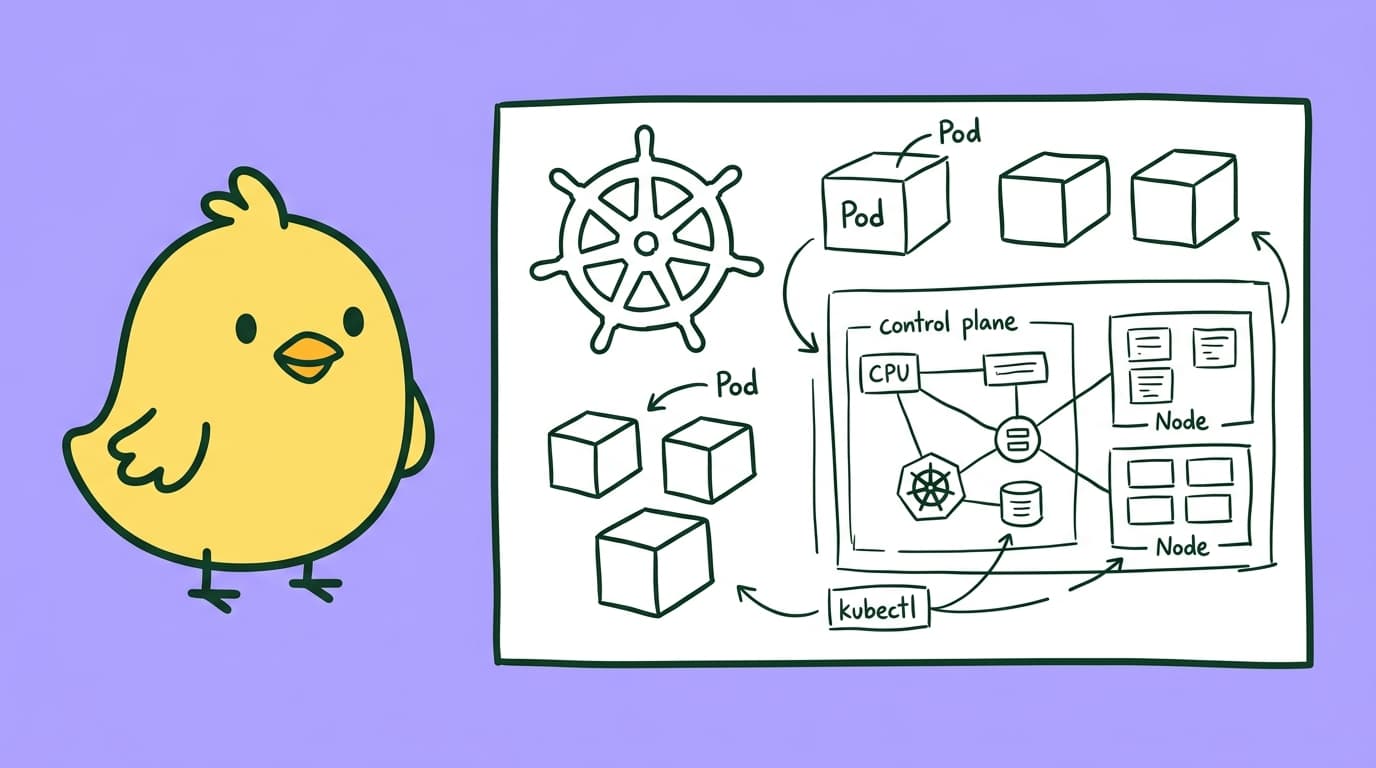
The Certified Kubernetes Administrator exam is divided into several key domains, each testing a specific set of skills. To succeed, you must have a balanced understanding of all these areas.
Commonly tested concepts include fundamental architecture, security best practices, and hands-on implementation details that are crucial for real-world scenarios.
Top Study Strategies for CKA
1. Use Active Recall: Don't just read the material. Use ReadRoost's AI-generated flashcards to test yourself constantly.
2. Spaced Repetition: Our platform uses advanced SRS algorithms to ensure you review concepts just as you're about to forget them.
3. Hands-on Practice: For CKA, theoretical knowledge isn't enough. Make sure to spend time in the lab environment or use our interactive quiz mode.
Why Use ReadRoost for CKA?
ReadRoost offers specialized study packs for CKA. Every question goes through our validation pipeline: Kimi K2 generates the question and explanation, Claude Opus reviews each one against the official learning materials for CKA, and any unsupported claim gets flagged before it ships. Each pack also carries our Improvement Guarantee - if you study with us and do not feel more confident on exam day, money back.
With our progress tracking and domain-level analytics, you'll know exactly where you stand and which areas need more focus before exam day.
Test Your Knowledge
10 questions pulled from the live ReadRoost CKA pack. Answer each one to see where you stand before the exam.
Try 10 Free Questions
Question 1 of 10You need to verify that an RBAC ClusterRole has the correct permissions without applying it to the cluster. Which command allows dry-run inspection?
Knowledge Check (10 questions)
Question 1 · Cluster Architecture, Installation & Configuration
You need to verify that an RBAC ClusterRole has the correct permissions without applying it to the cluster. Which command allows dry-run inspection?
- kubectl apply -f clusterrole.yaml --dry-run=client to validate syntax
- kubectl auth can-i create deployments as user to test permissions
- kubectl describe clusterrole rolename to see permissions
- RBAC roles must be applied to test them; dry-run is not available
Correct answer: kubectl apply -f clusterrole.yaml --dry-run=client to validate syntax
The --dry-run=client flag validates the manifest without applying it. kubectl auth can-i tests actual permissions but requires the role to exist. kubectl describe shows existing roles. Dry-run is available for validation.
Question 2 · Workloads & Scheduling
You need to deploy a web application with 3 replicas that automatically scales when CPU usage exceeds 80%. Which Kubernetes resources are required?
- A Deployment with 3 replicas and a manual scale procedure
- A Deployment with 3 initial replicas and a HorizontalPodAutoscaler targeting 80% CPU threshold
- A StatefulSet with 3 replicas and built-in auto-scaling via replicas field
- A Service with 3 endpoints and Ingress controller for scaling
Correct answer: A Deployment with 3 initial replicas and a HorizontalPodAutoscaler targeting 80% CPU threshold
HPA (HorizontalPodAutoscaler) automatically adjusts Deployment replicas based on metrics like CPU. The Deployment provides the base template. StatefulSets are for stateful workloads. Services and Ingress manage traffic, not scaling.
Question 3 · Services & Networking
You need to route traffic to a Service based on the hostname in the HTTP request. Which Kubernetes resource should you use?
- A Service with multiple ports
- An Ingress resource with host-based routing rules
- A NetworkPolicy to filter traffic by hostname
- A LoadBalancer service with hostname configuration
Correct answer: An Ingress resource with host-based routing rules
Ingress provides Layer 7 (HTTP) routing based on hostnames, paths, and other HTTP attributes. Services operate at Layer 4 and don't understand HTTP. NetworkPolicy filters network traffic but doesn't understand hostnames. LoadBalancer is Layer 4.
Question 4 · Storage
A StorageClass is created with provisioner: kubernetes.io/aws-ebs and reclaimPolicy: Delete. What happens to the EBS volume when a PVC using this StorageClass is deleted?
- The volume is retained and can be reused by manually creating a new PV
- The volume is automatically deleted from AWS
- The volume is moved to a read-only state but retained
- The volume creation request is denied until manual cleanup occurs
Correct answer: The volume is automatically deleted from AWS
reclaimPolicy: Delete instructs the storage provisioner to automatically delete the underlying storage resource when the PVC is deleted. This is the default behavior for dynamically provisioned volumes. Retain would keep the volume, read-only state isn't a valid reclaim policy, and denial of PVC deletion isn't how reclaimPolicy works.
Question 5 · Troubleshooting
A Node reports a status of NotReady. You need to investigate the cause. Which command should you run first?
- kubectl get nodes to see the node's age
- kubectl describe node <node-name> to check conditions and events
- kubectl logs kubelet to view kubelet logs directly
- kubectl top node <node-name> to check resource usage
Correct answer: kubectl describe node <node-name> to check conditions and events
kubectl describe node provides the Status, Conditions (Ready, MemoryPressure, DiskPressure, PIDPressure), and recent Events that explain why the node is NotReady. kubectl get nodes only shows the status without details, kubectl logs requires node access, and kubectl top only shows resource usage, not status conditions.
Question 6 · Cluster Architecture, Installation & Configuration
A kubeadm node is in NotReady state. What is the first diagnostic step?
- Run 'kubectl drain node' to force it to Ready state
- Check 'kubectl describe node nodename' for conditions and their reasons
- Immediately delete and re-join the node
- Restart the entire cluster
Correct answer: Check 'kubectl describe node nodename' for conditions and their reasons
kubectl describe shows node conditions (MemoryPressure, DiskPressure, NotReady reason). This diagnostic reveals the root cause. Draining is for graceful shutdown, not fixing NotReady. Deletion/cluster restart are extreme actions.
Question 7 · Cluster Architecture, Installation & Configuration
When using kubeadm to configure an external etcd cluster, which flag specifies the etcd endpoints?
- --etcd-servers=https://etcd1:2379,https://etcd2:2379,https://etcd3:2379 in kubeadm init config
- --etcd-cluster-endpoints in kubeadm join
- The etcd endpoints are auto-discovered from DNS
- External etcd is not supported with kubeadm
Correct answer: --etcd-servers=https://etcd1:2379,https://etcd2:2379,https://etcd3:2379 in kubeadm init config
External etcd requires specifying endpoints via kubeadm config (ClusterConfiguration.etcd.external.endpoints). kubeadm doesn't auto-discover etcd. External etcd is fully supported for HA.
Question 8 · Cluster Architecture, Installation & Configuration
An RBAC audit reveals a user has excessive permissions. What is the safest approach to remediate?
- Immediately revoke all permissions and re-grant only necessary ones
- Delete the user's account and recreate it with correct permissions
- Create a more restrictive Role/ClusterRole and gradually migrate bindings to it
- Change the user's password to prevent access while investigating
Correct answer: Create a more restrictive Role/ClusterRole and gradually migrate bindings to it
Gradual migration prevents service disruption. Immediate revocation risks breaking applications. Deleting/recreating accounts is destructive. Password changes don't address RBAC. A staged approach allows testing.
Question 9 · Cluster Architecture, Installation & Configuration
You need to allow a Pod to read events cluster-wide for monitoring purposes. Which RBAC resource is needed?
- A Role with 'events' resource in kube-system namespace
- A ClusterRole with apiGroups: [''], resources: ['events'], verbs: ['get', 'list', 'watch']
- A ServiceAccount with 'monitoring' label
- A NetworkPolicy allowing Pod-to-APIserver traffic
Correct answer: A ClusterRole with apiGroups: [''], resources: ['events'], verbs: ['get', 'list', 'watch']
Cluster-wide access to events requires ClusterRole (not namespace-scoped Role). Events are in the core API group (''). The verbs allow reading and watching events. ServiceAccounts and NetworkPolicy don't grant API access.
Question 10 · Cluster Architecture, Installation & Configuration
A Helm release fails to upgrade because the ConfigMap already exists but wasn't created by Helm. What should you do?
- Delete the existing ConfigMap manually, then retry the Helm upgrade
- Use 'helm upgrade --install' flag to skip validation
- Modify the Helm chart to reference an existing ConfigMap
- Add --force flag to Helm upgrade to overwrite the ConfigMap
Correct answer: Delete the existing ConfigMap manually, then retry the Helm upgrade
Helm tracks resources it creates. An existing resource it didn't create conflicts. Deleting it resolves the conflict. --install and --force don't address the core issue (resource ownership conflict). Modifying the chart is a workaround.
Frequently Asked Questions
How long does it take to prepare for CKA?
Preparation time varies, but most candidates spend between 4 to 8 weeks of dedicated study, depending on their prior experience.
What is the passing score for CKA?
While passing scores can change, most certification exams require a score of around 700 out of 1000.
Are the ReadRoost CKA practice questions reliable?
Every CKA (Certified Kubernetes Administrator) question in the ReadRoost pack goes through a two-stage validation pipeline. Kimi K2 generates the question and explanation, then Claude Opus reviews it against the official CNCF learning materials — any claim the reviewer cannot verify gets flagged and rewritten before publish. The full pack ships 1021 questions, all spaced-repetition-tracked so you focus on weak areas first.
Master Your Exams with ReadRoost
Practice questions, flashcards, and timed exams for 57 certifications.
Related Articles
CCA-F vs AWS AIF-C01: Which AI Certification Should You Get First?
The AI certification landscape is barely a year old and already crowded. If you only have time for one entry-level credential in 2026, the two that are actually worth comparing are Anthropic's Claude Certified Architect Foundations (CCA-F), launched March 2026, and AWS's Certified AI Practitioner (AIF-C01), launched August 2024 and now the fastest-growing AWS certification in the catalogue. They look superficially similar (both are foundational, both cover generative AI, both sit at roughly USD 100) but they validate different skills and signal differently to different employers. This post is the honest side-by-side: who each one is for, why doing both still makes sense, and an unflinching read on which one the job market actually rewards today.
How to Pass the CCA-F Exam: Complete Study Guide (2026)
The Claude Certified Architect Foundations exam is the first credential built around real production work with Claude: agentic loops, the Claude Agent SDK, Claude Code, prompt engineering, the Model Context Protocol, and context management. The exam rewards people who have actually built something, not people who have memorised feature lists. This guide is the 2 to 4 week plan I would give a developer with around six months of Claude experience: how to spend each week, which free Anthropic resources to use, what to drill on the last weekend, and how to manage time on exam day. For a deeper breakdown of the question style and difficulty, see the companion post at /blog/cca-foundations-practice-questions, which has 12 worked-through sample questions from the same blueprint.
I Studied SY0-701 for Three Months - Here Is What I Would Do Differently From Day One
Three months into studying for SY0-701, I realised I had spent the first six weeks doing almost exactly the wrong thing. The material was not too hard. The exam was not unfair. I had simply absorbed twelve hours of Professor Messer videos before touching a practice question, memorised every acronym in a vacuum, and assumed performance-based questions would be a small part of the exam. None of that was wrong - all of it was in the wrong order. After helping hundreds of people prep through ReadRoost, the same five mistakes show up in nearly every pass-second-time story I hear. Here is the version of day one I wish I had given myself.