Skip to content
How to Ace the AWS-DVA: AWS Certified Developer Associate
exam guide

How to Ace the AWS-DVA: AWS Certified Developer Associate

By ReadRoost TeamFebruary 8, 2026
The AWS Certified Developer Associate (AWS-DVA) is one of the most sought-after certifications in the industry. Whether you are a beginner or looking to advance your career, passing this exam is a significant milestone. This guide provides the ultimate roadmap to success.

Understanding the AWS-DVA Exam Domains

The AWS Certified Developer Associate exam is divided into several key domains, each testing a specific set of skills. To succeed, you must have a balanced understanding of all these areas.

Commonly tested concepts include fundamental architecture, security best practices, and hands-on implementation details that are crucial for real-world scenarios.

Top Study Strategies for AWS-DVA

1. Use Active Recall: Don't just read the material. Use ReadRoost's AI-generated flashcards to test yourself constantly.

2. Spaced Repetition: Our platform uses advanced SRS algorithms to ensure you review concepts just as you're about to forget them.

3. Hands-on Practice: For AWS-DVA, theoretical knowledge isn't enough. Make sure to spend time in the lab environment or use our interactive quiz mode.

Why Use ReadRoost for AWS-DVA?

ReadRoost offers specialized study packs for AWS-DVA. Every question goes through our validation pipeline: Kimi K2 generates the question and explanation, Claude Opus reviews each one against the official learning materials for AWS-DVA, and any unsupported claim gets flagged before it ships. Each pack also carries our Improvement Guarantee - if you study with us and do not feel more confident on exam day, money back.

With our progress tracking and domain-level analytics, you'll know exactly where you stand and which areas need more focus before exam day.

Test Your Knowledge

10 questions pulled from the live ReadRoost DVA-C02 pack. Answer each one to see where you stand before the exam.

Try 10 Free Questions

Question 1 of 10
Domain 1: Development with AWS Services

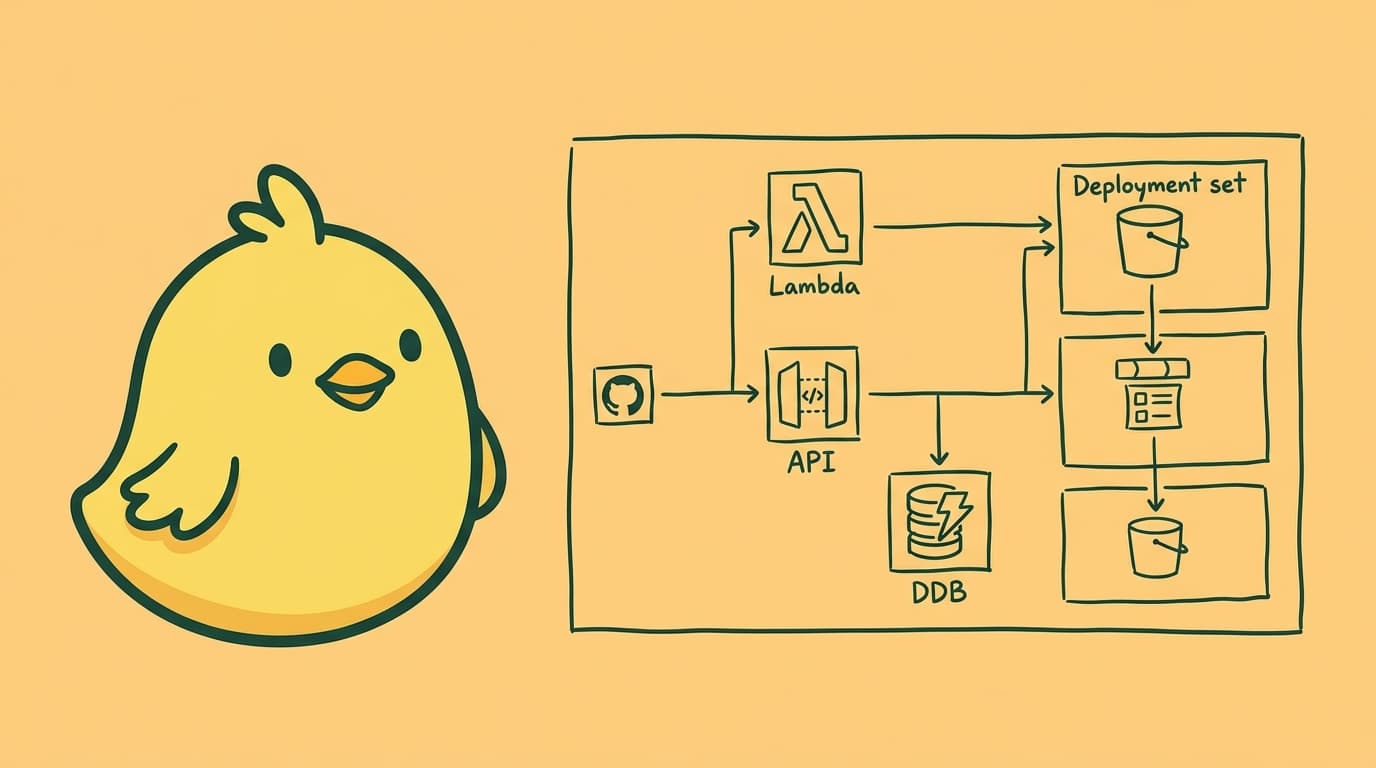
A startup wants to build a serverless API that captures user feedback with low latency and automatic scaling. Which combination of AWS services would best meet these requirements?

Knowledge Check (10 questions)

Question 1 · Domain 1: Development with AWS Services

A startup wants to build a serverless API that captures user feedback with low latency and automatic scaling. Which combination of AWS services would best meet these requirements?

  • API Gateway, Lambda, and DynamoDB
  • EC2, ELB, and RDS
  • ECS, CloudFront, and Aurora
  • Elastic Beanstalk, ElastiCache, and DocumentDB

Correct answer: API Gateway, Lambda, and DynamoDB

API Gateway provides serverless API management, Lambda handles compute logic without server management, and DynamoDB offers low-latency, automatically scaling NoSQL database storage. This combination ensures scalability, performance, and minimal infrastructure overhead.

Question 2 · Domain 2: Security

A development team is building a microservices application and wants to ensure secure communication between services. They need to implement fine-grained access control and encryption. What is the MOST secure approach?

  • Use IAM roles with VPC security groups and implement AWS PrivateLink for service communication
  • Use public IP addresses and security group rules only
  • Implement network ACLs without IAM roles
  • Use shared security group across all services

Correct answer: Use IAM roles with VPC security groups and implement AWS PrivateLink for service communication

This approach provides multiple layers of security by using IAM roles for least privilege access, VPC security groups for network-level control, and PrivateLink for private, encrypted service communication without exposing services to the public internet.

Question 3 · Domain 3: Deployment

A startup is developing a microservices application and wants to implement a deployment strategy that minimizes downtime and allows gradual traffic shifting. Which AWS service and deployment approach would best meet these requirements?

  • Use AWS CodeDeploy with a blue/green deployment strategy
  • Use AWS Elastic Beanstalk with a rolling deployment
  • Use AWS CloudFormation with in-place updates
  • Use Amazon ECS with a standard rolling update

Correct answer: Use AWS CodeDeploy with a blue/green deployment strategy

Blue/green deployments with CodeDeploy allow zero-downtime deployments by creating a parallel environment and gradually shifting traffic. This approach provides a safe rollback mechanism and minimizes potential service interruptions during application updates.

Question 4 · Domain 4: Troubleshooting and Optimization

A microservices application is experiencing intermittent performance issues. Which AWS service would be most effective for tracing and identifying bottlenecks across distributed services?

  • AWS X-Ray
  • Amazon CloudWatch
  • AWS CloudTrail
  • AWS Config

Correct answer: AWS X-Ray

AWS X-Ray provides distributed tracing capabilities that help developers analyze and debug complex microservices architectures by tracking requests as they flow through different services and identifying performance bottlenecks and errors.

Question 5 · Unknown

You are developing a REST API using API Gateway that needs to log all requests and responses for debugging. Which approach provides the best integration with CloudWatch Logs?

  • Enable CloudWatch Logs for API Gateway execution logs and data trace logs in the stage settings
  • Use API Gateway request/response mapping templates to manually write to CloudWatch Logs
  • Configure API Gateway to send metrics to CloudWatch Metrics only, as logs aren't supported
  • Create a Lambda function to intercept all API calls and write logs to CloudWatch

Correct answer: Enable CloudWatch Logs for API Gateway execution logs and data trace logs in the stage settings

API Gateway has built-in CloudWatch Logs integration through stage settings, where you can enable both execution logs (method calls) and data trace logs (full request/response bodies). This is the native, most efficient approach without manual implementation.

Question 6 · Domain 1: Development with AWS Services

A developer is implementing an event-driven architecture to process order transactions. Which AWS service would provide the most flexible and decoupled messaging pattern?

  • Amazon EventBridge
  • Amazon SNS
  • Amazon SQS
  • AWS Step Functions

Correct answer: Amazon EventBridge

EventBridge allows routing events between AWS services and custom applications with advanced filtering and routing capabilities. It supports event-driven architectures more flexibly than traditional messaging services by enabling complex event routing and transformation.

Question 7 · Domain 1: Development with AWS Services

A developer needs to implement a Lambda function that processes files uploaded to an S3 bucket. What is the most efficient way to trigger the Lambda function?

  • Configure S3 event notification to invoke Lambda
  • Use CloudWatch periodic scheduling
  • Implement continuous polling of S3 bucket
  • Use AWS Step Functions to manage invocations

Correct answer: Configure S3 event notification to invoke Lambda

S3 event notifications provide a direct, efficient mechanism to trigger Lambda functions immediately when objects are added to a bucket. This approach minimizes latency and eliminates the overhead of continuous polling.

Question 8 · Domain 1: Development with AWS Services

When designing a distributed application with asynchronous processing requirements, which AWS service pattern would provide the most reliable message delivery?

  • SQS with dead-letter queue configuration
  • Direct Lambda invocation
  • SNS fan-out pattern
  • Kinesis data streaming

Correct answer: SQS with dead-letter queue configuration

SQS with a dead-letter queue enables reliable message processing by automatically capturing messages that cannot be successfully processed, allowing for detailed error handling and retry mechanisms.

Question 9 · Domain 1: Development with AWS Services

A microservices application requires a high-performance, low-latency NoSQL database. Which DynamoDB feature would optimize read performance?

  • DynamoDB Accelerator (DAX)
  • Global Secondary Indexes
  • On-demand capacity mode
  • Time-to-live (TTL) configuration

Correct answer: DynamoDB Accelerator (DAX)

DynamoDB Accelerator (DAX) provides in-memory caching that dramatically reduces read latency from milliseconds to microseconds, making it ideal for high-performance read-heavy workloads.

Question 10 · Domain 1: Development with AWS Services

A developer is building a secure file upload mechanism. Which S3 SDK operation would ensure client-side encryption before transmission?

  • Use S3 client-side encryption with AWS KMS
  • Use server-side encryption
  • Enable S3 bucket policy encryption
  • Use presigned URLs

Correct answer: Use S3 client-side encryption with AWS KMS

Client-side encryption with AWS KMS ensures files are encrypted before transmission, providing an additional layer of security by encrypting data at the client level prior to upload.

Frequently Asked Questions

How long does it take to prepare for AWS-DVA?

Preparation time varies, but most candidates spend between 4 to 8 weeks of dedicated study, depending on their prior experience.

What is the passing score for AWS-DVA?

While passing scores can change, most certification exams require a score of around 700 out of 1000.

Are the ReadRoost DVA-C02 practice questions reliable?

Every DVA-C02 (AWS Certified Developer Associate) question in the ReadRoost pack goes through a two-stage validation pipeline. Kimi K2 generates the question and explanation, then Claude Opus reviews it against the official AWS learning materials — any claim the reviewer cannot verify gets flagged and rewritten before publish. The full pack ships 500 questions, all spaced-repetition-tracked so you focus on weak areas first.

Master Your Exams with ReadRoost

Practice questions, flashcards, and timed exams for 57 certifications.

Related Articles

CCA-F vs AWS AIF-C01: Which AI Certification Should You Get First?

The AI certification landscape is barely a year old and already crowded. If you only have time for one entry-level credential in 2026, the two that are actually worth comparing are Anthropic's Claude Certified Architect Foundations (CCA-F), launched March 2026, and AWS's Certified AI Practitioner (AIF-C01), launched August 2024 and now the fastest-growing AWS certification in the catalogue. They look superficially similar (both are foundational, both cover generative AI, both sit at roughly USD 100) but they validate different skills and signal differently to different employers. This post is the honest side-by-side: who each one is for, why doing both still makes sense, and an unflinching read on which one the job market actually rewards today.

How to Pass the CCA-F Exam: Complete Study Guide (2026)

The Claude Certified Architect Foundations exam is the first credential built around real production work with Claude: agentic loops, the Claude Agent SDK, Claude Code, prompt engineering, the Model Context Protocol, and context management. The exam rewards people who have actually built something, not people who have memorised feature lists. This guide is the 2 to 4 week plan I would give a developer with around six months of Claude experience: how to spend each week, which free Anthropic resources to use, what to drill on the last weekend, and how to manage time on exam day. For a deeper breakdown of the question style and difficulty, see the companion post at /blog/cca-foundations-practice-questions, which has 12 worked-through sample questions from the same blueprint.

I Studied SY0-701 for Three Months - Here Is What I Would Do Differently From Day One

Three months into studying for SY0-701, I realised I had spent the first six weeks doing almost exactly the wrong thing. The material was not too hard. The exam was not unfair. I had simply absorbed twelve hours of Professor Messer videos before touching a practice question, memorised every acronym in a vacuum, and assumed performance-based questions would be a small part of the exam. None of that was wrong - all of it was in the wrong order. After helping hundreds of people prep through ReadRoost, the same five mistakes show up in nearly every pass-second-time story I hear. Here is the version of day one I wish I had given myself.

We improve our products and advertising by using Microsoft Clarity to see how you use our website. By using our site, you agree that we and Microsoft can collect and use this data. Our privacy policy has more details.