
Why People Are Getting AWS Exams Voided at Home, and How to Make Sure You Are Not One of Them
What is actually going on
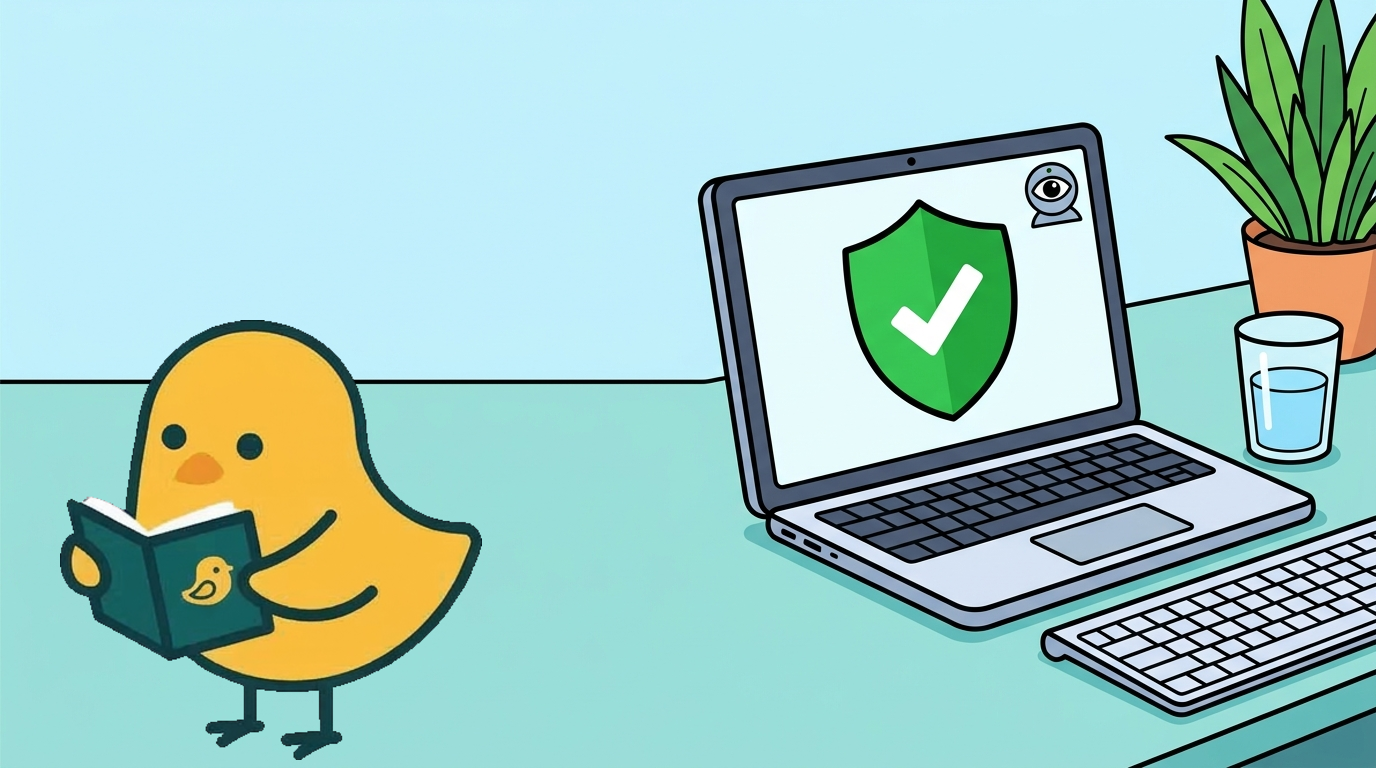
When you take an AWS exam from home, you are watched two ways at once. A live proctor checks in over your webcam and microphone, and an automated system monitors the video feed the whole time, watching for movement, extra faces, sounds, and eyes drifting off the screen. On top of that, sessions can be reviewed after the fact, which is why some people get a "pass" on the day and then a revocation later. That delayed reversal is the genuinely upsetting part of the stories you have read, and it is real.
What is not well-supported is the idea that AWS or the proctoring vendor is handing out instant bans after a question or two for no reason. Almost every voided exam traces back to something the system saw and read as a possible violation. The good news in that is simple: if you understand what it is looking for, the whole risk is largely in your control before you even start.
The innocent habits that get exams flagged
None of these mean you cheated. They are just behaviours the monitoring reads as suspicious, and any one of them can earn a warning or, repeated, a terminated session.
Looking away from the screen. This is the big one. Glancing up to think, reading a long question by looking around it, or staring off while you work through a calculation all look like you might be reading notes. The system flags eyes-off-screen, and it does not know the difference between thinking and cheating.
Talking or mouthing the words. Reading questions under your breath is a common habit, especially under pressure, and it looks exactly like someone relaying questions to a helper. Same goes for muttering "okay, so..." to yourself. Keep your mouth still and quiet.
Other people or voices. Someone walking into the room, a partner asking a question from the next room, a kid wandering in, even a loud conversation through the wall, any voice that is not yours can trip the microphone monitoring.
Phones, paper, and second screens. A phone visible on the desk, a notepad within reach, a second monitor plugged in (even switched off), headphones, a smartwatch. The pre-exam room scan is meant to catch these, and having any of them appear later is a fast way to get pulled up.
Leaving the camera frame. Standing up, leaning out of view to grab something, or stretching so your face leaves the frame. There are no breaks in these exams, and disappearing from view is treated as a problem.
Set your room up so you cannot trip the wire
Most voided exams are prevented an hour before you start, not during. Clear your desk down to the keyboard, mouse, and monitor. Nothing else on the surface, nothing within arm's reach. Put your phone in another room, not just in a drawer.
Lock the door and tell everyone in the house, out loud, that you cannot be interrupted for the next two and a half hours. Pick the quietest room you have, away from the TV and from foot traffic. If you share walls with noisy neighbours, factor that in when you book your time slot.
Do the system and environment check that the proctoring software offers before exam day, not five minutes before. Confirm your webcam, microphone, and internet hold up, and unplug any second monitor completely. Have your government photo ID ready, and make sure the room is well lit with the light in front of you, not behind you.
Train the one habit that matters: keep your eyes on the screen
The single most useful thing you can practise is reading and thinking without looking away. It sounds trivial until you are 50 questions into a hard SAA-C03 paper and your instinct is to stare at the ceiling while you reason about a VPC design. That instinct is what gets flagged.
Practise it the same way you practise the content. When you do timed question sets in the lead-up, deliberately keep your gaze on the screen and read questions silently in your head. Build the muscle memory now so that on exam day, sitting still and quiet feels normal rather than like something you are forcing.
If your session is paused or your result is revoked
If a proctor pauses you, stay calm and follow their instructions exactly. Do not argue, do not look away, do not reach for anything. Most pauses are recoverable if you respond cleanly. Losing your temper or moving out of frame turns a warning into a termination.
If a result is revoked after the fact, you are not necessarily out of options. Open a case with AWS Certification Support, explain calmly what happened, and ask for a review. Keep it factual. Outcomes vary, and there is no guarantee, but a measured appeal is worth more than venting in a forum.
And if the whole idea of being monitored this closely makes you tense, that tension itself raises the odds of fidgeting and looking around. For a lot of people the simplest fix is to skip home testing entirely and book a physical test centre, where the rules are clearer and you are not policing your own eye movements for two hours.
The real lesson under the horror stories
It is easy to read a wall of "exam revoked" posts and conclude the system is out to get you. It mostly is not. It is blunt, automated, and unforgiving of ordinary nervous habits, which is a different problem and a solvable one. Go in knowing what it watches for, set your room up so there is nothing to flag, and train yourself to sit still and read silently.
The best protection of all is walking in so well-prepared on the actual content that you are calm, because calm people do not fidget, mutter, or stare at the walls. That is where your study time pays off twice. ReadRoost SAA-C03 practice sets get you to that level of readiness, so on exam day your attention is on the questions and nothing else, which happens to be exactly what the proctor wants to see.
Full Study Blueprint
See the complete crowdsourced blueprint with all 1 study plan for AWS Certified Solutions Architect - Associate — resources, ratings, and tips from people who passed.
Frequently Asked Questions
Can AWS really revoke my exam after I have passed?
Yes. Online-proctored sessions can be reviewed after the exam, and a result can be revoked if that review flags a suspected violation. It is uncommon, but it is the reason some candidates report a delayed reversal.
Is it true people get banned after two questions?
That framing is exaggerated. Sessions get paused or terminated when the monitoring detects something it reads as a violation, not at random after a set number of questions. Understanding what triggers it removes almost all of the risk.
Is it against the rules to look away or think with my eyes off the screen?
Looking away is not banned, but repeated or prolonged eyes-off-screen is one of the most common things the system flags, because it cannot tell thinking from reading notes. Train yourself to keep your gaze on the screen.
Can anyone else be in the house during the exam?
They can be in the house, but not in the room, and not audible. Any other person appearing on camera or any voice on the microphone can flag the session. Lock the door and tell the household you cannot be interrupted.
Should I just take it at a test centre instead?
If home monitoring makes you anxious, a physical test centre is a solid choice. The rules are clearer, the environment is controlled for you, and you are not responsible for policing your own room and behaviour for two hours.
Master Your Exams with ReadRoost
Practice questions, flashcards, and timed exams for 57 certifications.
Related Articles
AWS will let you renew some certs without re-sitting the exam. Just not all of them yet.
If you hold an AWS certification, you already know the slightly deflating part of the deal: every three years, to keep it, you sit the exam again. AWS has just opened a second door. For some certifications you can now keep your credential current by working through curated training and hands-on labs instead of booking another exam. It is a genuinely good change. It is also in early beta and covers only a handful of certs so far, so it is worth knowing exactly what is on the table before you plan around it.
Azure security cert retires in August: take AZ-500 now or wait for SC-500?
Microsoft has finally put a hard date on AZ-500: the Azure Security Engineer exam and the certification behind it both retire on 31 August 2026. Whenever an exam gets a retirement date, the same question floods the study forums, and I usually have a quick answer. With CompTIA I tell people to sit the current version now. With Microsoft, the honest answer is almost the reverse, and it catches people out every time, because Microsoft certifications expire and renew in a way CompTIA's simply do not. So before you cram to beat the August deadline, work out which of these two camps you are actually in.
AWS retired its Machine Learning cert and opened a Generative AI one. What should you study now?
If your AWS study plan still has "Machine Learning Specialty" written on it, the plan is out of date. AWS quietly retired that exam in March 2026, and in the same stretch it has been rebuilding its AI track and updating the Security Specialty around generative AI. So the question I keep getting is a fair one: with the old ML cert gone and a pile of new AI options, what should you actually study now? Here is the lay of the land, minus the hype.